In the daily operation of industrial equipment, ensuring the stable operation of machines is crucial, especially for those used in metallographic sample preparation. The Q-2 Manual Metallographic Sample Cutting Machine from Laizhou Jincheng Industrial Equipment Co., Ltd. is a high - quality and reliable device, but like any mechanical equipment, it may encounter problems such as grinding wheel runout. This article focuses on this common issue, providing a detailed analysis and systematic handling process.
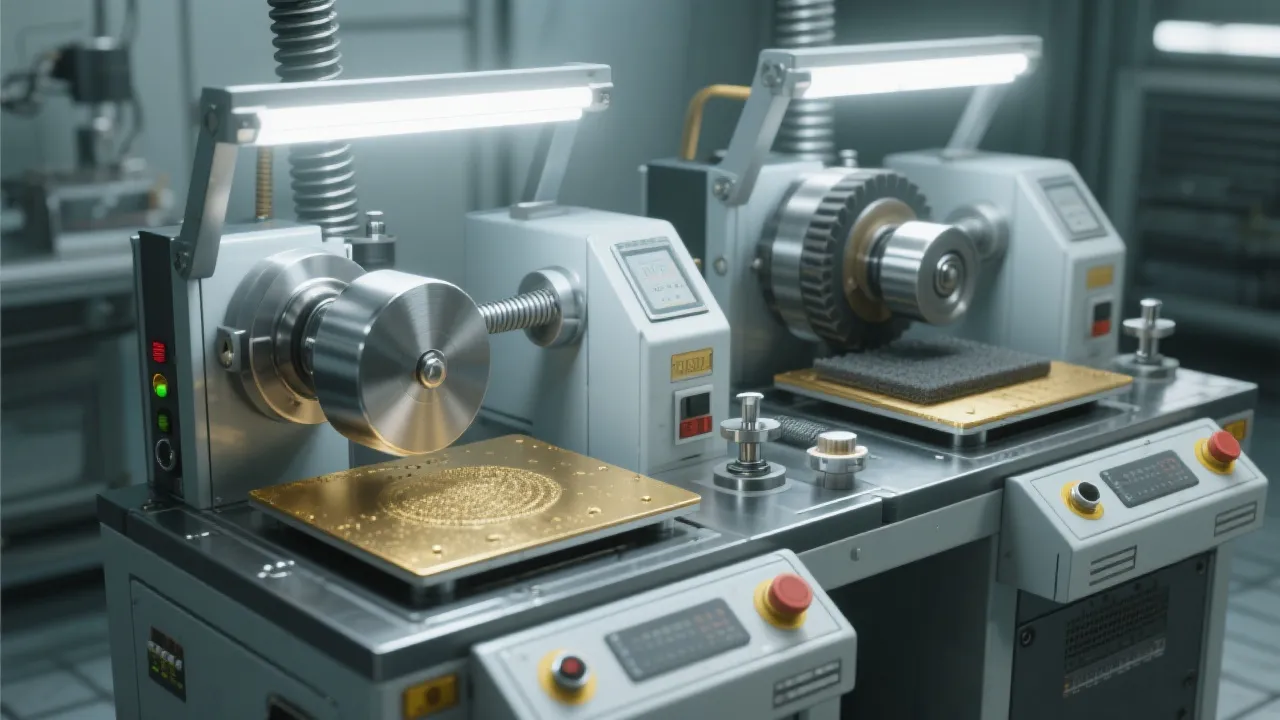
The first step in solving the grinding wheel runout problem is to correctly identify it. Usually, when the cutting machine is running, irregular sounds or vibrations can be obvious signs of this problem. In addition, if the cutting surface of the metallographic sample is uneven, it may also be caused by grinding wheel runout. The picture below shows the normal and abnormal states of the grinding wheel during operation, which can help operators recognize the problem quickly. 
There are several possible reasons for grinding wheel runout. Firstly, improper installation of the grinding wheel is a common cause. If the grinding wheel is not installed concentrically with the spindle, it will inevitably cause runout. Secondly, long - term use of the cutting machine may lead to wear of the spindle bearings, which can also affect the stability of the grinding wheel. Thirdly, external factors such as improper storage of the grinding wheel, which may cause deformation, can also contribute to this problem.
Once the problem is identified, a series of troubleshooting steps should be taken. First, check the installation of the grinding wheel. Make sure it is firmly fixed and concentric with the spindle. If necessary, reinstall the grinding wheel according to the operation manual. Second, inspect the spindle bearings. If there are signs of wear, they should be replaced in time. Third, examine the grinding wheel for any visible damage or deformation. If found, replace the grinding wheel with a new one. The following table summarizes the troubleshooting steps:
| Step | Inspection Item | Solution |
|---|---|---|
| 1 | Grinding wheel installation | Reinstall if necessary |
| 2 | Spindle bearings | Replace if worn |
| 3 | Grinding wheel condition | Replace if damaged or deformed |
After troubleshooting, corresponding solutions should be implemented. For improper installation, carefully follow the installation steps in the operation manual. When replacing spindle bearings, choose high - quality bearings to ensure long - term stability. And when replacing the grinding wheel, select a product that matches the cutting machine's specifications. The video tutorial below provides detailed guidance on these operations. Watch Video Tutorial
Preventive maintenance is the key to reducing the occurrence of grinding wheel runout. Regularly lubricate the spindle bearings to reduce wear. Keep the cutting machine clean and dry, and avoid storing the grinding wheel in a humid or high - temperature environment. In addition, establish a standard maintenance log to record the maintenance time, content, and problems found. The following is a simple maintenance log template:
| Date | Maintenance Content | Problems Found |
|---|---|---|
| [Date 1] | Lubricate spindle bearings | None |
| [Date 2] | Check grinding wheel | Slight wear |
The Q-2 Manual Metallographic Sample Cutting Machine from Laizhou Jincheng Industrial Equipment Co., Ltd. is a cost - effective and reliable product. With its high - quality performance and professional after - sales service, it can provide long - term support for your laboratory and quality control work. If you want to improve the stability of your metallographic sample cutting machine and reduce downtime, click here to learn more about our products and services.




Hardness-Tester7MHVS-1000A-1.jpg?x-oss-process=image/resize,h_1200,m_lfit/format,webp)

Hardness-TesterHV-5103050A-1.jpg?x-oss-process=image/resize,h_1200,m_lfit/format,webp)