Building Online Material Testing Equipment for Large Metallurgical Enterprises: A Project Roadmap from Requirements to Delivery
27 07,2026
Laizhou Jincheng Industrial Equipment Co.,Ltd
Project Experience
Laizhou Jincheng Industrial Equipment Co.,Ltd outlines a practical project approach for online material testing equipment in large metallurgical enterprises—covering requirements definition, site condition assessment, system design, hardness testing and metallographic analysis module configuration, manufacturing, commissioning, and final delivery.
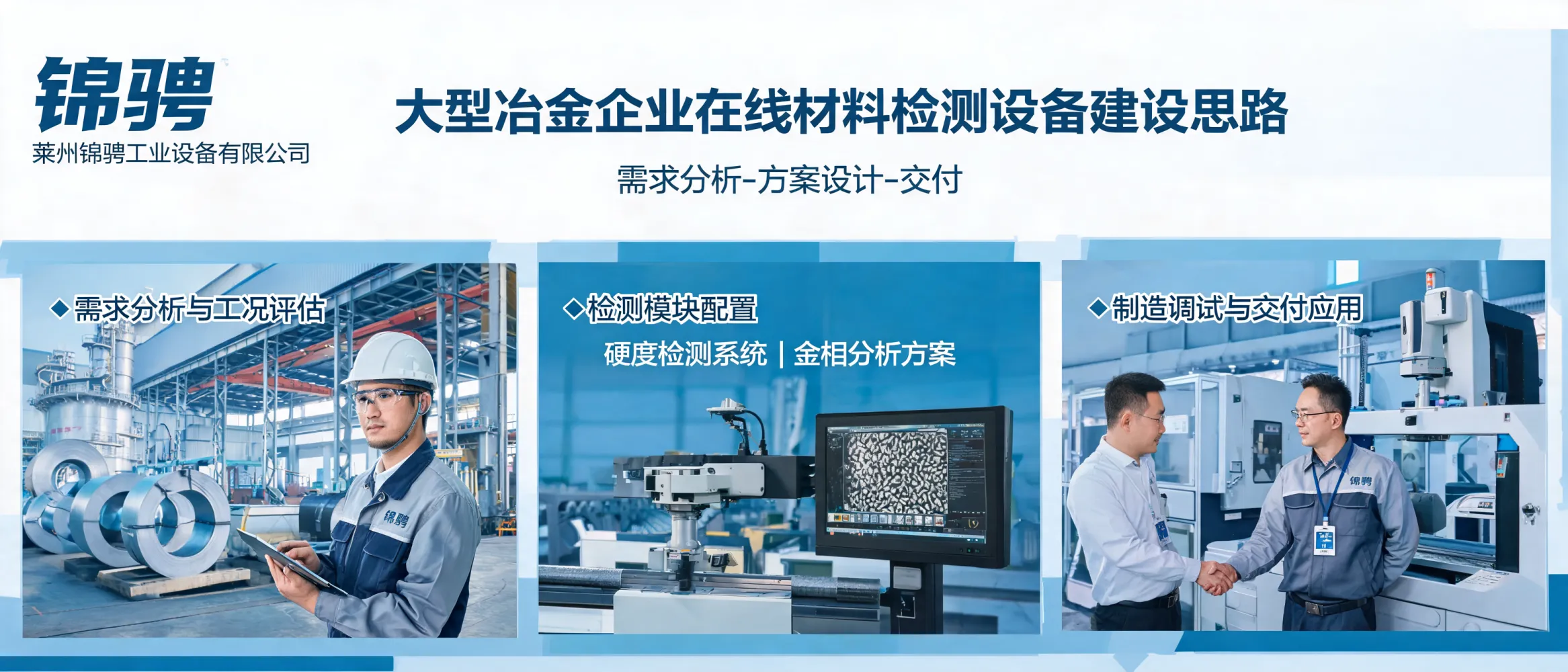
Large steel and metallurgical plants often need online material testing equipment that integrates hardness testing and metallographic analysis into stable, plant-ready workflows. Because these projects are frequently non-standard (custom) and site-dependent, a clear roadmap—from requirements to delivery—reduces rework, shortens commissioning time, and improves acceptance readiness.
Laizhou Jincheng Industrial Equipment Co.,Ltd (est. 2004) focuses on metallographic preparation/inspection equipment and hardness testers, serving B2B customers in mechanical manufacturing, metallurgy, chemical, power, universities, and research institutes—while also undertaking the design and manufacturing of online testing equipment for large metallurgical enterprises.
1) Requirement Mapping: Define What “Online Testing” Must Achieve
Start by turning production and quality goals into testable specifications. For metallurgical environments, “online” usually means a system that fits the production rhythm, controls variability, and outputs traceable results.
- Material & process scope: what grades, forms, heat-treatment states, and which production lines are included.
- Test items: hardness (e.g., Vickers/Brinell/Rockwell as applicable) and metallographic evaluation needs (structure observation and sample preparation level).
- Throughput & takt time: expected sample volume and allowable test cycle time per batch/shift.
- Acceptance criteria: how results will be judged (internal standards, ASTM/ISO-aligned practices where required).
- Data & traceability: identification rules (heat number/batch), result retention, and reporting format for QA/QC.
2) On-Site Condition Assessment: Plant Reality Drives the Design
Before finalizing a system scheme, evaluate site conditions that influence mechanical layout, safety protection, stability, and maintainability.
Key assessment checkpoints
- Installation space & layout: line-side placement, operator access, maintenance clearance.
- Utilities: power, compressed air, water/coolant needs (if any), grounding and cabling routes.
- Environmental factors: dust, vibration, temperature fluctuation, and protective enclosure requirements.
- Sample logistics: how samples are collected, labeled, transferred, and returned/archived.
- Safety & compliance: guarding, interlocks, emergency stop, and plant safety procedures.
3) System Scheme Design: From Modules to an Online Inspection System
An online material testing project is best structured as a set of coordinated modules. Each module can be selected and configured to match production requirements and site constraints.
| Module |
Purpose in an online system |
Typical configuration considerations |
| Hardness testing |
Provide fast, repeatable hardness values for QC decision-making. |
Test method selection, fixture design, measurement repeatability needs, and reporting outputs. |
| Metallographic sample preparation |
Prepare specimens to a surface quality suitable for microstructure observation. |
Manual vs computerized preparation, consistency requirements, and consumables plan. |
| Metallographic analysis |
Support microstructure observation and documentation aligned with lab procedures. |
Optical imaging requirements, documentation workflow, and operator usability. |
| Data management & traceability |
Ensure each result is attributable to a sample, batch, and time. |
ID rules, result export formats, audit trail expectations, and integration boundaries. |
| Integration & enclosure |
Make the system stable and safe in plant conditions. |
Mechanical layout, protective housing, vibration control, and maintainability planning. |
Practical note: In metallurgical environments, system reliability is often determined as much by enclosure, fixtures, and sample logistics as by the tester itself.
4) Hardness Testing Module: Manual vs Computerized Selection Logic
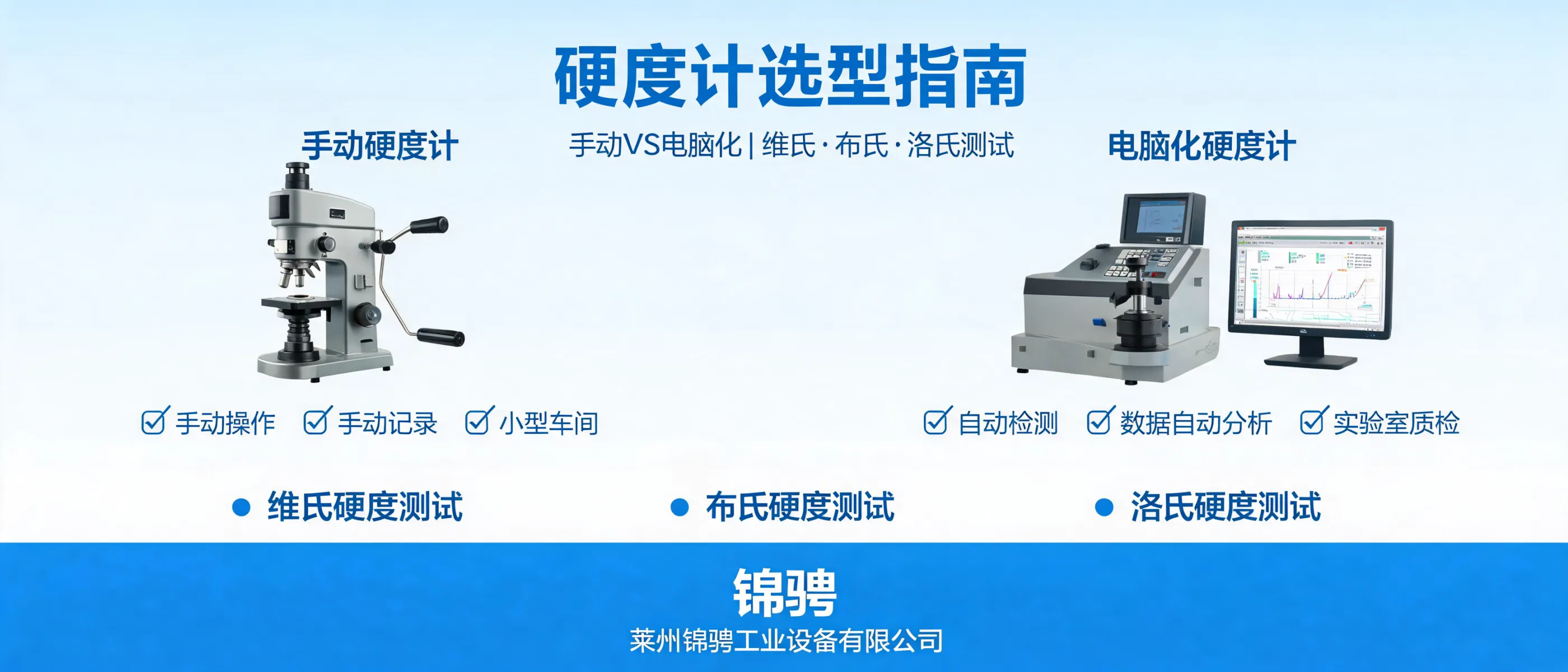
Laizhou Jincheng provides both manual hardness testers and computerized hardness testing equipment. For online projects, the choice depends on throughput targets, operator workload, and consistency needs.
- Manual hardness testing: based on classic indentation principles; suitable for quick checks and straightforward procedures where operator interaction is acceptable.
- Computerized hardness testing: uses high-precision sensing and intelligent data processing to support automated workflows and standardized outputs for Vickers, Brinell, Rockwell (as configured).
- Quality control support: computerized systems can assist with statistical handling and reporting to support QC routines, depending on project scope and internal processes.
5) Metallographic Preparation & Analysis: Aligning with ASTM/ISO-Oriented Workflows
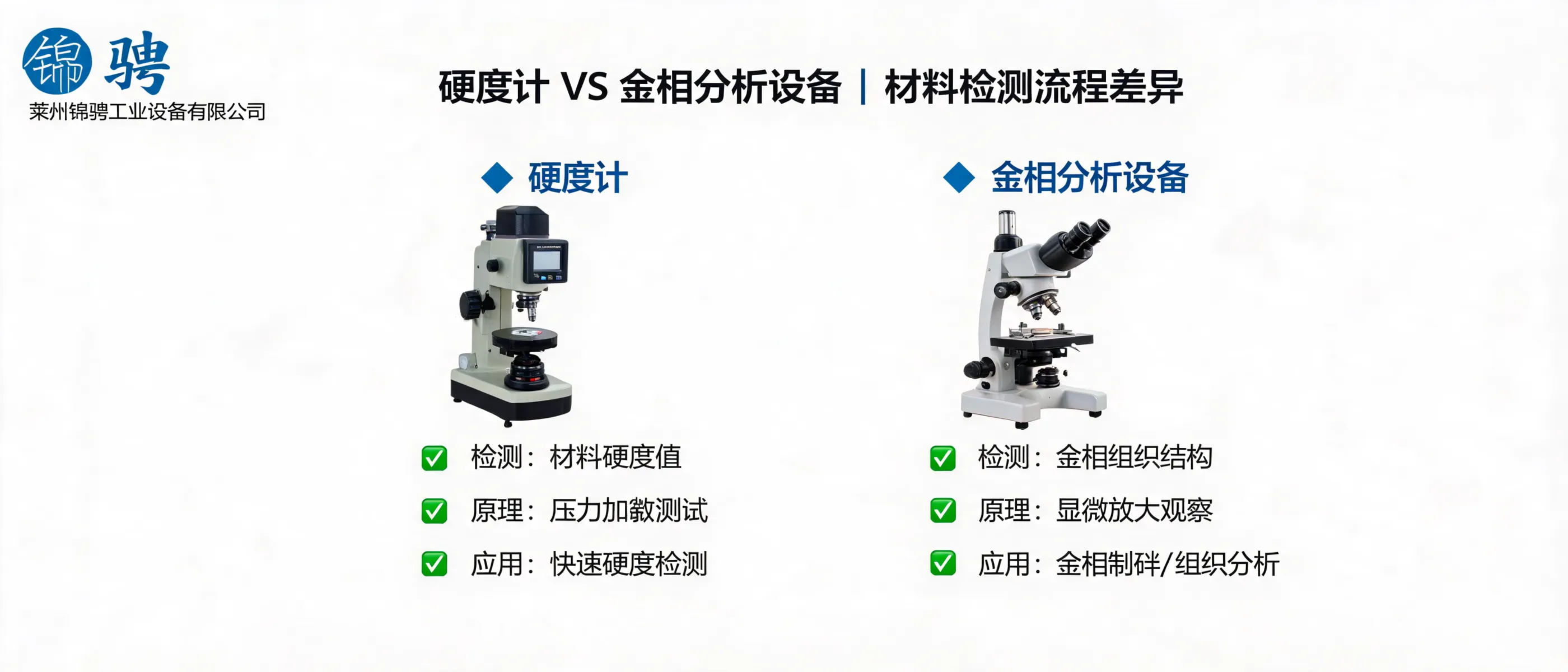
Metallographic results are only as reliable as specimen preparation. Laizhou Jincheng’s metallographic equipment portfolio covers manual preparation for education and baseline analysis, and computerized preparation solutions with automated control and high-resolution optical imaging support for more demanding laboratory routines.
What to clarify during configuration
- Specimen types & sizes: drives tooling, fixtures, and preparation steps.
- Preparation consistency: determines whether manual or automated preparation is more suitable.
- Documentation needs: image capture, archiving rules, and how results are attached to batch IDs.
- Standards alignment: specify any ASTM/ISO-driven internal procedures required for your acceptance process.
6) Manufacturing, Factory Verification, Commissioning, and Delivery Readiness
- Design freeze & interface confirmation: finalize module list, layout, and utility interfaces based on the site assessment.
- Manufacturing & assembly: build core equipment, fixtures, enclosures, and necessary control elements for the online environment.
- Factory checks (as agreed): verify functional flow, safety elements, and basic test procedures with representative samples or agreed methods.
- On-site installation & commissioning: align system behavior with real production conditions (space, vibration, dust, sample routing).
- Acceptance & handover: deliver documentation, operator guidance, and agreed result/output formats to support stable operation.
7) Who This Roadmap Is For
- Metallurgical enterprises planning metallurgical online inspection systems that combine hardness testing and metallographic analysis.
- Quality, process, and lab teams that need clearer definition of scope, throughput, traceability, and acceptance logic.
- Engineering teams evaluating feasibility, installation constraints, and custom (non-standard) equipment integration.
Working with Laizhou Jincheng on Non-Standard Online Testing Projects
As a B2B manufacturer specializing in hardness testing and metallographic equipment, Laizhou Jincheng Industrial Equipment supports customers from requirement mapping and module selection through system design, manufacturing, commissioning, and delivery—particularly for online testing equipment in large metallurgical enterprises.
If you already have basic inputs (materials, test items, sample volume, site utilities, and expected data outputs), the project discussion can move faster and remain aligned with your plant’s operational constraints.







-1.jpg?x-oss-process=image/resize,h_1200,m_lfit/format,webp)