How Large Metallurgical Plants Plan Online Testing Equipment: From Inspection Needs to Customized Delivery
10 08,2026
Laizhou Jincheng Industrial Equipment Co.,Ltd
Project Experience
Laizhou Jincheng Industrial Equipment Co.,Ltd explains how large metallurgical plants can plan online testing equipment—from defining inspection takt time and on-site integration needs to data output, long-term stability, and customized design-to-delivery workflows—helping teams assess when standard equipment is sufficient versus when a tailored online solution is required.
Large metallurgical plants often face a practical question: when is standard testing equipment sufficient, and when is a tailored online inspection system required to match production rhythm, installation constraints, and quality-data needs?
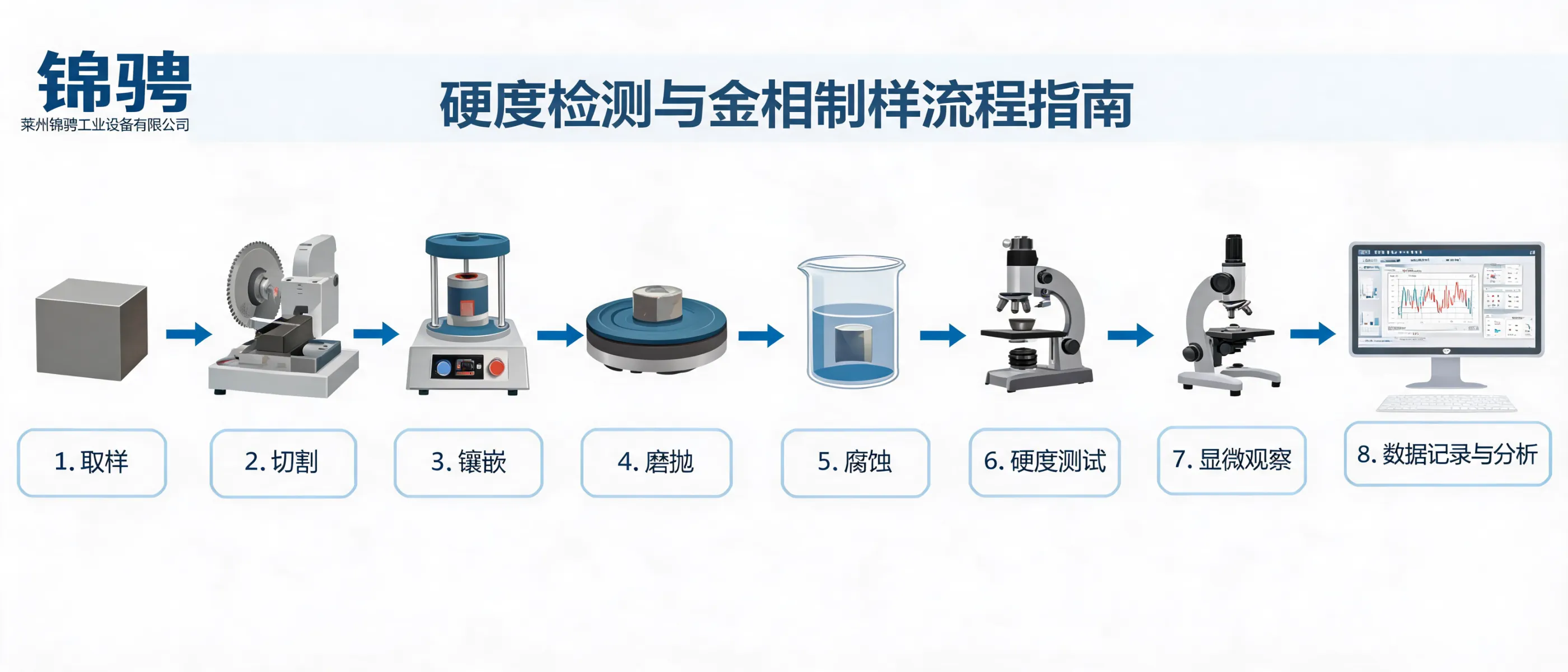
Laizhou Jincheng Industrial Equipment Co.,Ltd (established in 2004) provides hardness testing and metallographic inspection equipment for B2B users. This page shares a planning framework for online testing equipment—from defining inspection needs (takt time, integration, and data output) to specifying long-term stability expectations and mapping a realistic design-to-delivery path.
1) Start with the inspection task: what must be measured, where, and when
Define the test object and acceptance logic
- Material/part type and surface condition in real production (scale, temperature influence, vibration).
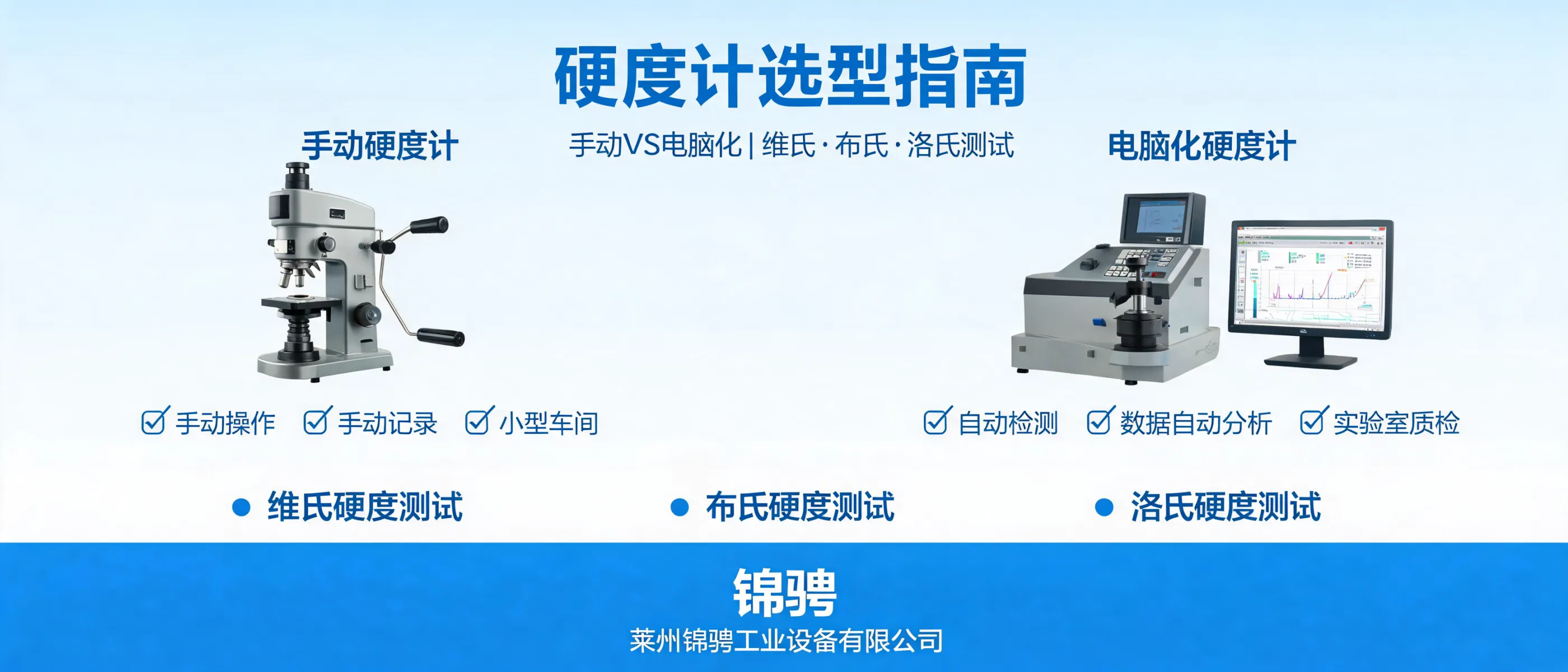
- Target test method (e.g., hardness testing modes such as Vickers/Brinell/Rockwell—based on your QC standard and part geometry).
- Sampling rules: every piece, periodic sampling, or event-triggered inspection.
Set inspection takt time and throughput constraints
- Inspection takt time: maximum time allowed per part to avoid bottlenecks.
- Production line speed/spacing and available dwell time for measurement.
- Required automation level: operator-assisted, semi-automatic, or fully automatic online inspection.
Clarify on-site integration boundaries
- Installation space, mounting points, and maintenance access.
- Environmental conditions: dust, coolant, electromagnetic interference, and vibration isolation needs.
- Line interface expectations: positioning/feeding, safety interlock, and inspection station layout.
2) Translate needs into specifications: the checklist that avoids rework
A good online testing equipment plan converts shop-floor reality into measurable requirements. The following items help engineering, QA, and production align early and reduce late-stage modifications.
| Requirement block |
What to specify (examples) |
Why it matters |
| Inspection rhythm |
Cycle time per piece, maximum queue length, shift-based workload |
Ensures the station matches production takt without becoming a bottleneck |
| Measurement output |
Hardness value type(s), pass/fail logic, statistical summaries |
Aligns what QC needs with what the system records and reports |
| Data interface |
Data format, traceability fields, integration with internal systems |
Supports auditability and consistent quality records across lines |
| Mechanical & layout fit |
Footprint, mounting, guarding, tool access for maintenance |
Avoids site clashes and reduces downtime risk during servicing |
| Stability expectations |
Operating conditions, calibration approach, repeatability controls |
Improves long-term consistency in continuous production environments |
Planning tip: if your takt time, installation constraints, and data output are all “standard,” standard equipment may be sufficient. Once any of these becomes line-specific (tight space, non-standard feeding, special traceability), a customized online solution is usually more efficient than repeated on-site fixes.
3) Decide: standard equipment vs. tailored online inspection system
When standard testing equipment can work
- You can measure in a stable, controlled area (near-line or off-line), with manageable sample volume.
- Integration requirements are minimal (no special feeding/positioning, limited traceability fields).
- Operators can follow a consistent procedure without impacting throughput.
When a tailored online solution is usually justified
- Inspection must keep pace with production (tight takt time) and needs automation to avoid queues.
- The station must fit a specific line layout with constrained space, safety guarding, and maintenance routes.
- You need consistent data output for QC trending, traceability, and long-term comparability.
- Site conditions (dust, vibration, interference) require protective design and stability controls.
4) Typical project path: from requirement alignment to commissioning
For large metallurgical plants, online testing equipment projects work best with a staged workflow. Below is a practical sequence used to keep decisions traceable and implementation manageable.
-
Requirement alignment — confirm inspection takt time, test method, measurement points, and acceptance logic.
-
On-site integration review — verify layout constraints, safety requirements, and line interfaces (feeding/positioning).
-
Solution design — define system boundary (standard modules + necessary customization), data output, and stability controls.
-
Manufacturing & internal verification — implement the agreed mechanical structure, sensing/measurement unit, and control logic.
-
Delivery, installation & commissioning — complete on-site setup, calibration approach agreement, and output validation with plant stakeholders.
What “customized delivery” typically includes
- Line-fit mechanical design (mounting, guarding, service access).
- Online workflow design (positioning, sequencing, operator interaction where needed).
- Data output definition (fields, reports, and QC-friendly summaries).
- Stability planning (protection, repeatability controls, and practical calibration routines).
5) How Laizhou Jincheng supports hardness testing and metallographic inspection needs
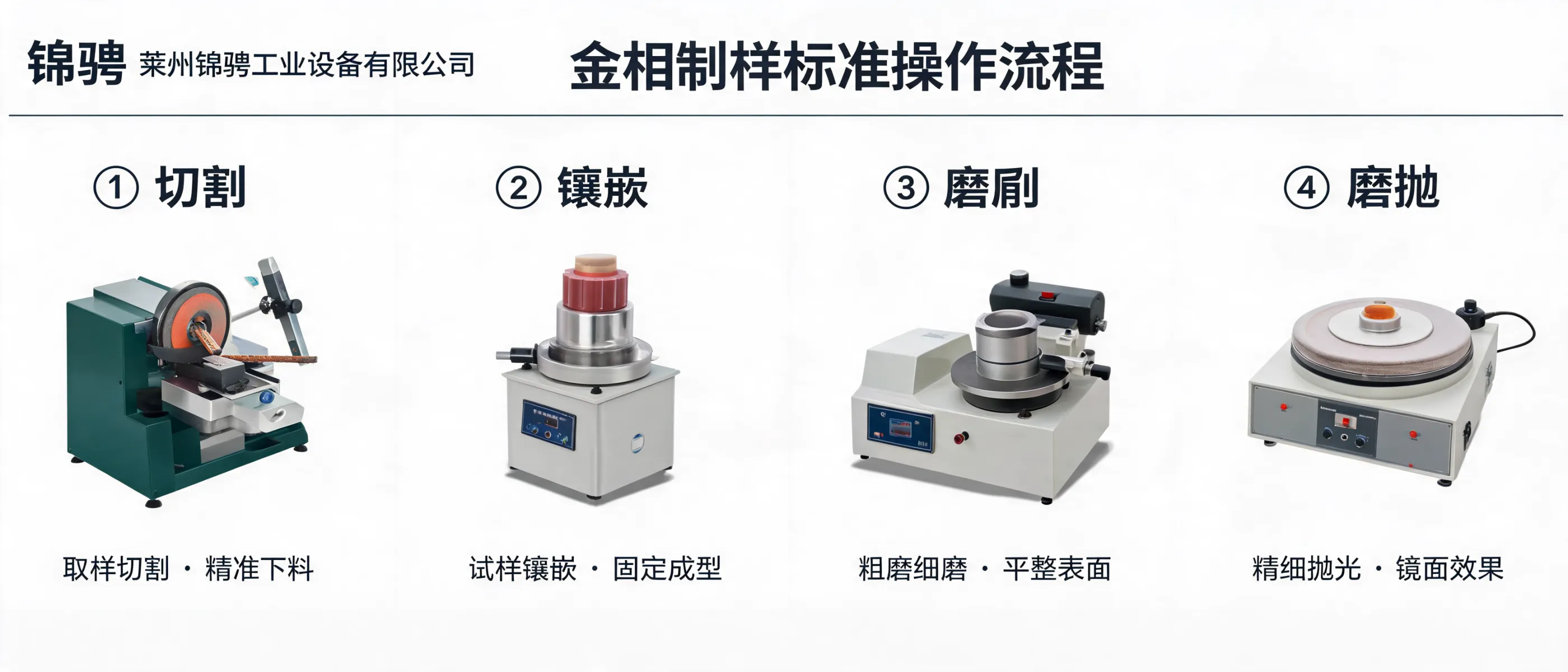
Laizhou Jincheng Industrial Equipment Co.,Ltd focuses on hardness testing and metallographic analysis equipment, supplying complete equipment and consumables solutions for B2B users. The product portfolio includes manual equipment for straightforward operation and teaching/basic analysis use, as well as computerized solutions that support automated control and high-resolution optical imaging for precise preparation workflows.
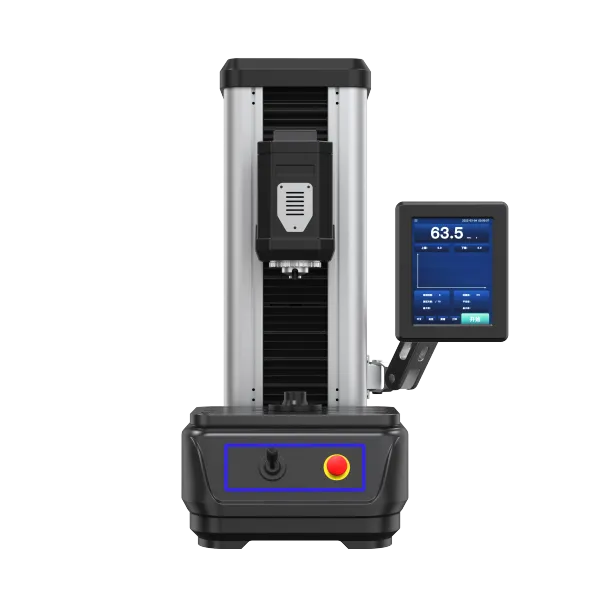
For hardness testing, options include classic indentation-based manual testers for rapid checks and computerized hardness systems equipped with high-precision sensing and intelligent data processing to output common hardness values and support statistical analysis for quality control—useful building blocks when planning metallurgical plant online inspection and deciding customization scope.
Talk to us with your line conditions
If you are planning online testing equipment for a large metallurgical plant, prepare a short brief covering: takt time, part/material details, station location constraints, and data output requirements. With these inputs, we can help you judge the boundary between a standard configuration and a tailored online inspection system—and define a feasible design-to-delivery path.
Best for: plant engineering, QA/QC, and production teams aligning on specifications.
Scope: planning, integration logic, and customization decision-making for online inspection.
Outcome: clearer requirements, steadier implementation, and more consistent QC data output.