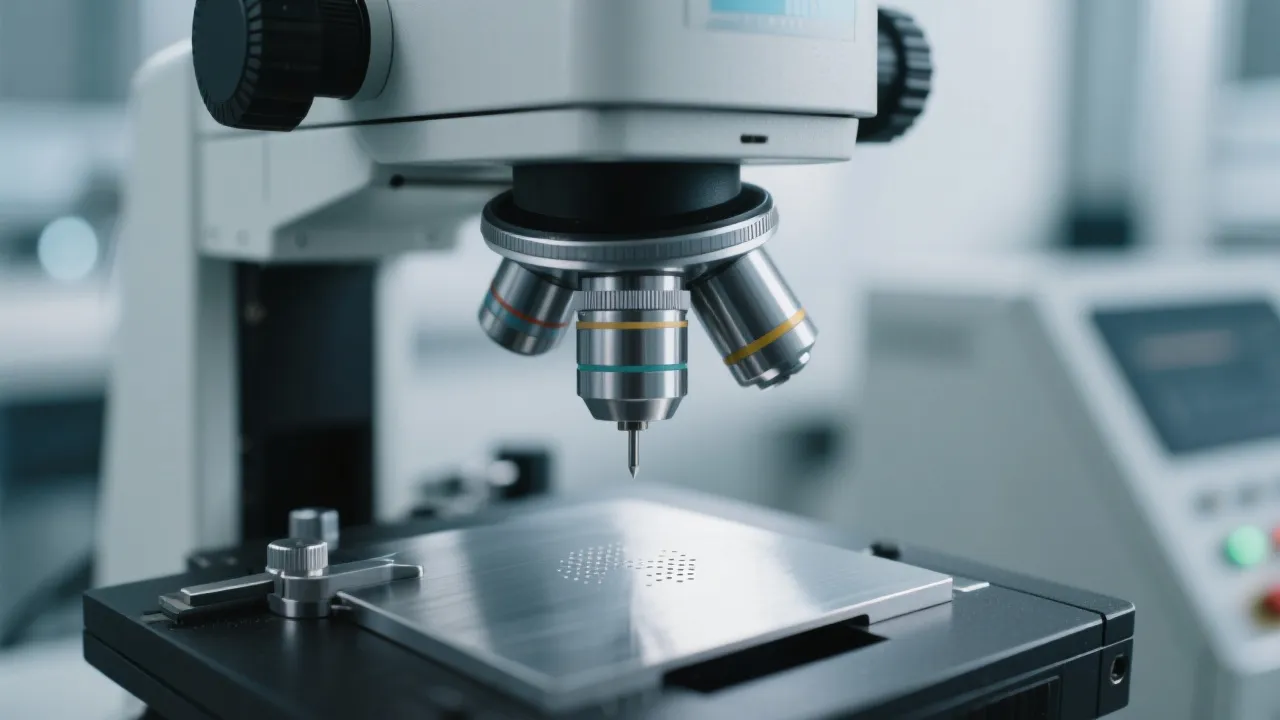
Non-Metal Rockwell Hardness Testing: Key Challenges and Parameter Optimization (ISO 6508 / ASTM E18)
28 02,2026
Jin Cheng
Technical knowledge
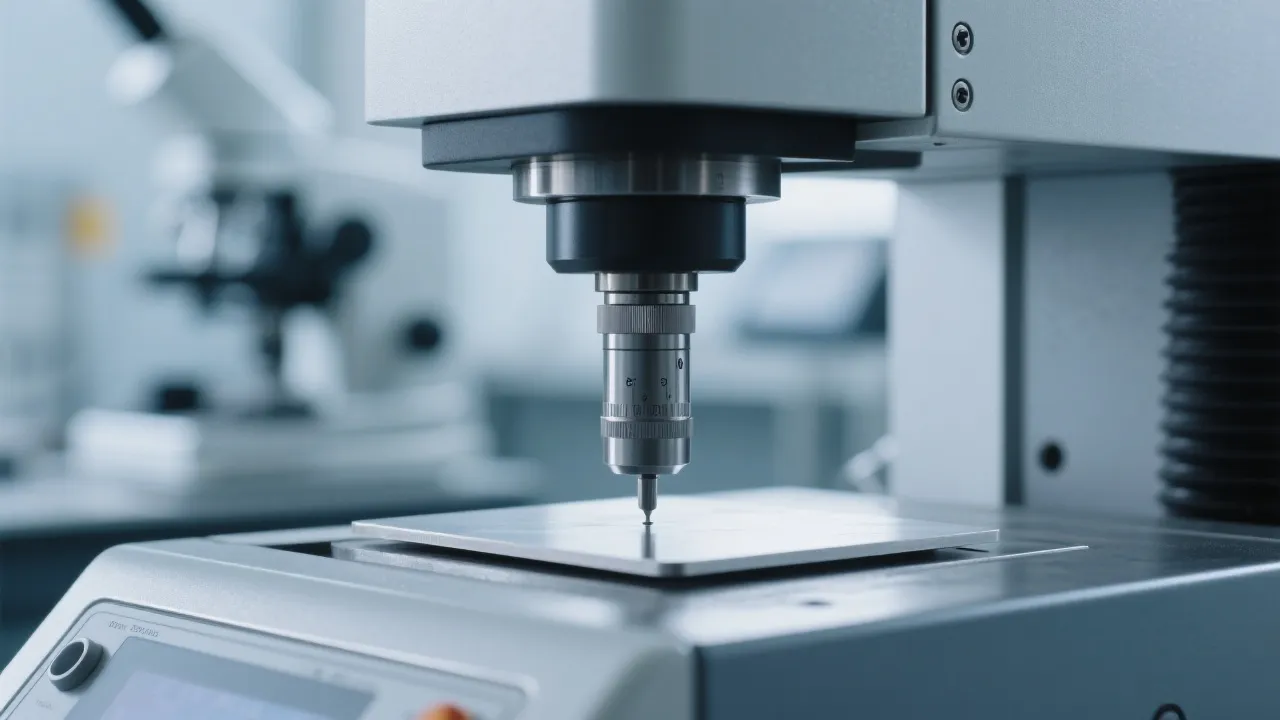
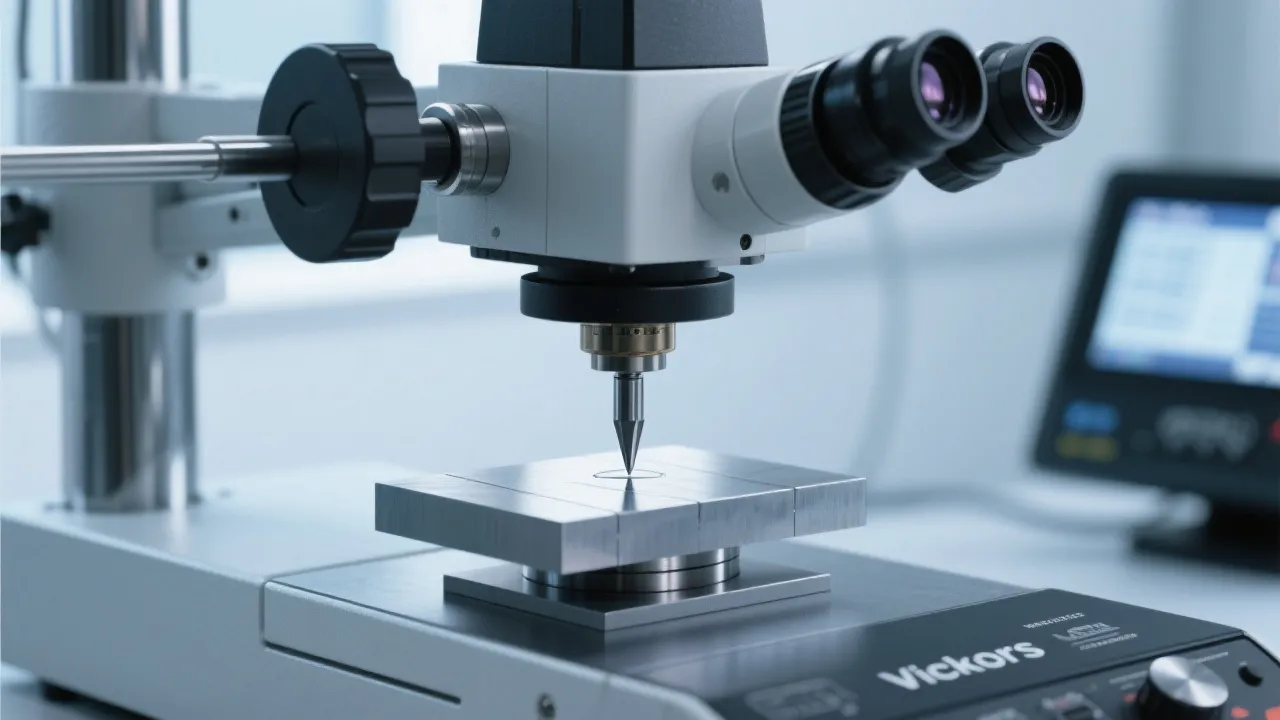
This article examines the most common technical challenges in non-metal hardness testing, with a focus on Rockwell methods for composites, ceramics, and plastics. It explains why indentation deformation mechanisms are often complex, why surface flatness and preparation have a disproportionate impact on repeatability, and why these materials can be highly sensitive to load selection and scale choice. Referencing GB/T 230.2-2018, ISO 6508, and ASTM E18, the article outlines practical approaches to specimen preparation and test-parameter optimization to improve accuracy across real R&D and quality-inspection workflows. It also highlights the role of an intelligent data processing system in multi-point measurement, automated statistics, and report consistency—reducing operator influence and strengthening traceability. For a material-specific Rockwell parameter configuration guide, please visit our Technical Documentation Center.
Hardness Testing for Non-Metallic Materials: Common Technical Bottlenecks and Practical Fixes
In R&D and incoming quality control, non-metallic material hardness testing often looks straightforward—until real-world samples arrive: fiber-reinforced laminates with resin-rich edges, sintered ceramics with micro-porosity, or plastics that creep under load. Compared with metals, non-metals can show viscoelastic recovery, anisotropic indentation behavior, and higher sensitivity to surface prep and loading time. These variables make it easier for two labs to generate results that differ by 5–15 HR units on the same material batch when procedures are not tightly controlled.
Where Non-Metal Hardness Testing Becomes Unstable (Typical Use Cases)
Demand is rising for reliable Rockwell hardness measurements in non-metals, especially in scenarios such as: composite parts in aerospace interiors, ceramic insulators and wear components, and plastic housings that must pass assembly torque and drop tests. In these contexts, hardness is rarely used alone; it acts as a fast proxy for process stability, cure level, filler dispersion, or sintering consistency.
Field reality check (common lab symptoms)
Indent marks look “clean,” but repeated tests drift upward due to elastic recovery.
Edge zones read softer/harder because the indenter hits resin-rich regions or pores.
Two operators run the same scale but obtain different results due to dwell-time handling and reading interpretation.
Three Technical Challenges That Drive Most Measurement Errors
1) Complex indentation mechanics: anisotropy, porosity, and viscoelastic rebound
Many non-metals do not deform like homogeneous metals. Fiber composites behave differently along fiber direction vs. transverse direction; ceramics may chip microscopically rather than flow plastically; plastics exhibit time-dependent creep. In practical terms, the same load can produce different indentation depths depending on microstructure, and the reading can change after unloading due to partial recovery.
Reference data point (lab observation): For some glass-filled PA and PP grades, extending dwell time by ~5 seconds can shift results by 1–3 HR units, especially at higher ambient temperatures (e.g., 28–32°C).
2) High sensitivity to surface flatness and preparation
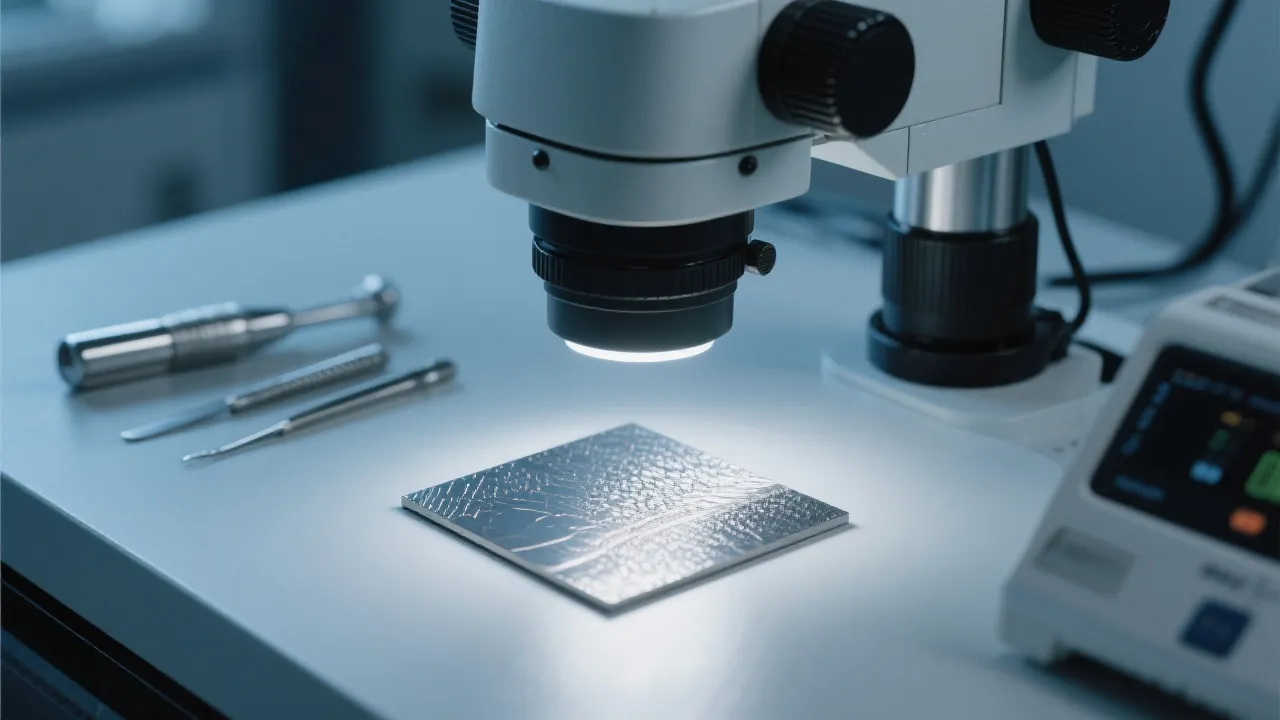
Rockwell methods depend on stable seating of the sample and consistent contact at the indentation point. Non-metals often arrive with molded texture, fiber print-through, glaze waviness, or minor warpage. Even a small tilt can create uneven load distribution, leading to noisy results and “outliers” that are not really outliers.
Practical threshold: When surface waviness becomes visible across the support area, multi-point readings typically widen; a common internal control target is keeping repeatability within ±1.0–1.5 HR on stable materials.
3) Load and scale selection are more “material-dependent” than many teams expect
Non-metals can be load-sensitive: a load that is too high may cause micro-cracking in ceramics or localized crushing in porous composites; a load too low may amplify surface effects in plastics. Selecting the appropriate Rockwell scale and controlling dwell time are essential to avoid artificially high/low readings or excessive scatter.
In day-to-day QC, the most repeatable setup is the one that produces: (a) clean indent geometry, (b) stable seating, and (c) a narrow distribution after multi-point measurement—not necessarily the setup that generates the highest numerical hardness.
Standards-Based Parameter Strategy (GB/T 230.2-2018, ISO 6508, ASTM E18)
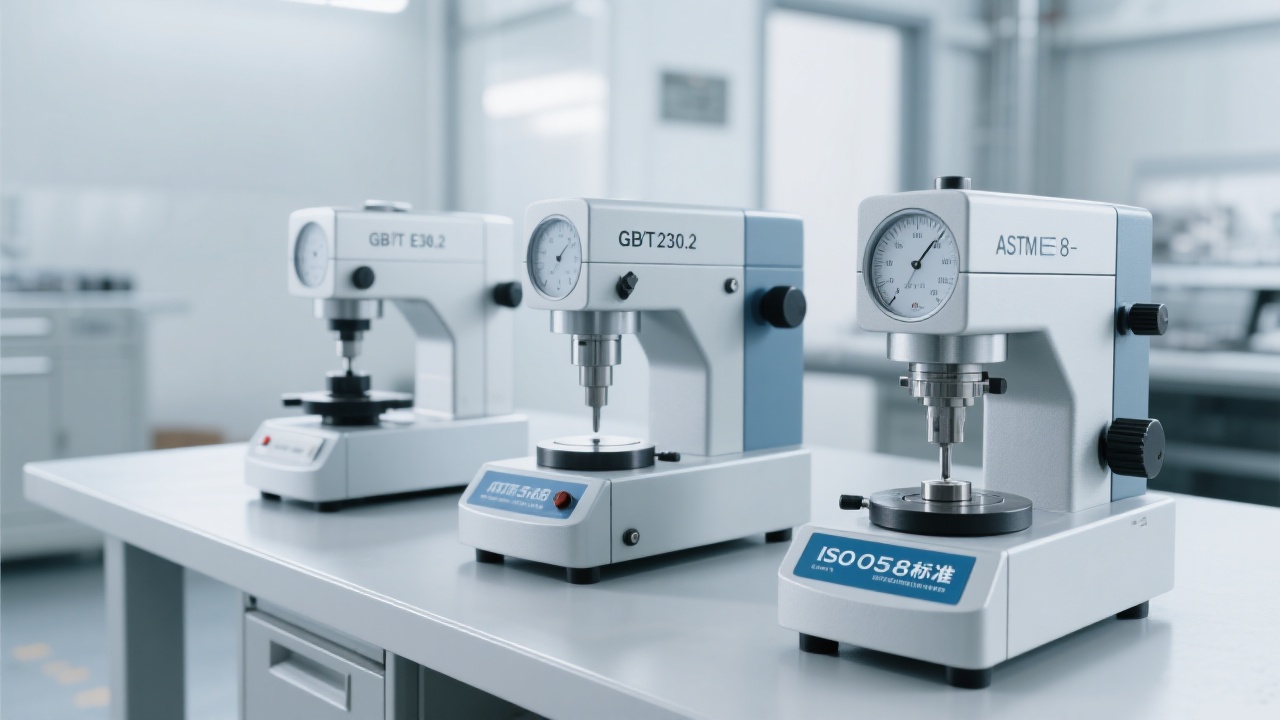
Rockwell testing for non-metals must be aligned with recognized frameworks such as GB/T 230.2-2018, ISO 6508, and ASTM E18. While these standards are widely referenced, performance still depends on how teams implement preparation, scale selection, and statistical reporting in real labs.
Recommended optimization map (by material type)
Material
Typical risk
Parameter focus
Operational tip
Fiber composites (CFRP/GFRP)
Anisotropy; resin-rich zones; delamination near edges
Test along defined orientation; discard points near pores/void clusters
Ceramics (alumina, zirconia)
Micro-chipping; brittle cracking; porosity
Avoid excessive force; ensure rigid support
Prefer stable surface finish; verify indent integrity under magnification if needed
Plastics (PA, POM, PP, PC)
Creep; temperature sensitivity; elastic recovery
Dwell-time consistency; conditioning control
Condition specimens (e.g., 23°C) and keep timing fixed across batches
The table above does not replace the requirements of ISO 6508 or ASTM E18; it highlights where parameter tuning most often improves repeatability and reduces rework in non-metal hardness testing.
Specimen Preparation: Small Steps That Prevent Big Deviations
Many non-metal test failures are not caused by the machine—they come from uncontrolled specimen conditions. In lab audits, the most frequent contributors are inconsistent thickness, poor backing support, and surface irregularities. Tightening preparation practice typically reduces standard deviation by 20–40% in routine production testing.
Surface and seating
Keep the contact area clean and stable. For molded plastics, remove flash and avoid heavily textured zones. For composites, avoid fiber print-through areas when possible and define a consistent test region in the work instruction.
Thickness and backing support
Non-metals can flex. If the specimen bends during indentation, readings become artificially low and scatter increases. Use a rigid, flat anvil and confirm there is no rocking. For thin parts, define an approved fixture method and keep it consistent.
Environmental conditioning
Plastics and resin systems can shift with temperature and humidity. A practical internal rule is to test at 23 ± 2°C when possible and document deviations. If comparing across labs, align conditioning time (for example, 24 hours at controlled conditions).
Why an Intelligent Data Processing System Matters (More Than Ever for Non-Metals)
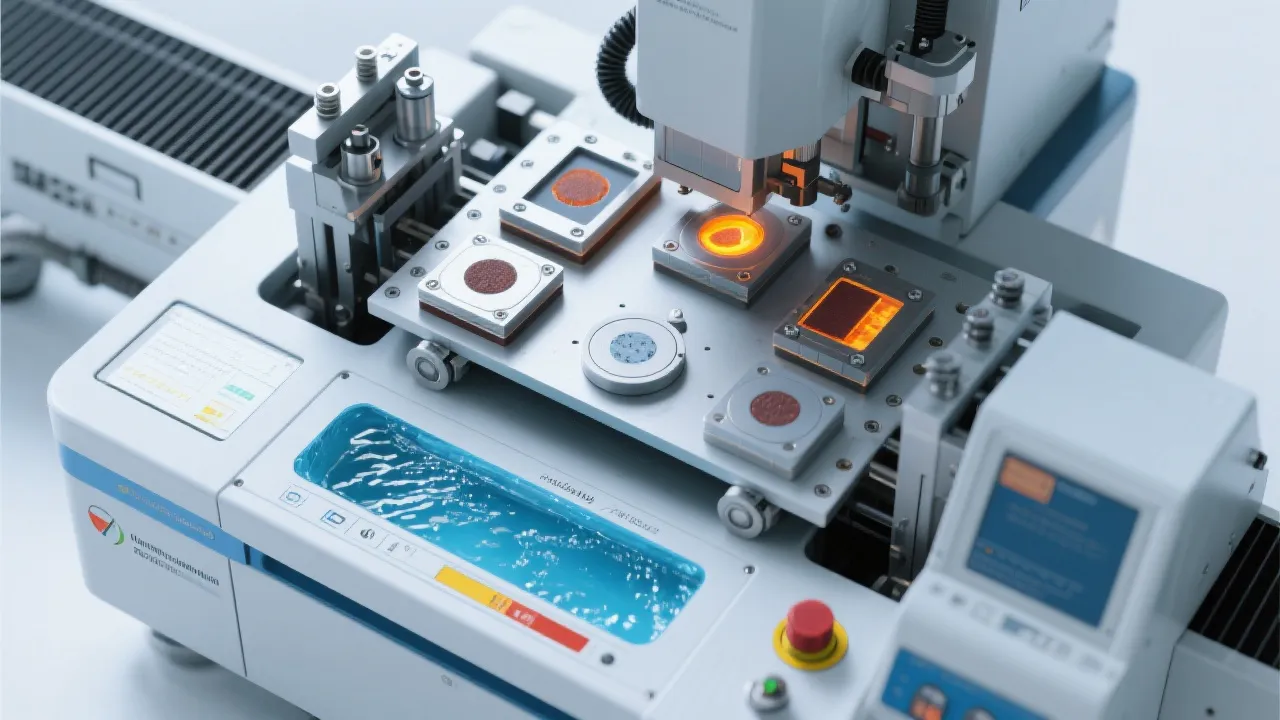
When indentation behavior is sensitive to time, surface, and microstructure, the best defense is not “more operator experience,” but a workflow that makes the measurement repeatable by design. An intelligent data processing system helps standardize the test cycle and reporting, especially when multiple operators and shifts are involved.
High-impact capabilities for QC and R&D
Multi-point measurement statistics: Automatically calculates mean, range, and standard deviation, helping teams identify whether a “bad value” is process-related or just local heterogeneity.
Batch reporting consistency: Standardizes the output format with scale, force, dwell time, operator ID, and timestamp—reducing manual transcription errors that often appear in audit trails.
Reduced operator variability: Guided workflows make it harder to “improvise” dwell time or point spacing. In multi-shift production, this can cut inter-operator variation by 30–50% on sensitive plastics and composites.
Common Pitfalls and Corrective Actions (Fast Checklist)
Symptom
Likely cause
Corrective action
Readings drift higher after repeated tests
Elastic recovery / time dependence
Fix dwell time; control temperature; use consistent timing across shifts
Large scatter on the same specimen
Surface waviness / poor seating / heterogeneity
Improve flatness; avoid textured zones; increase points and report SD
Unexpectedly low results on thin parts
Specimen flexing; insufficient backing support
Use rigid anvil/fixture; verify no rocking; standardize support method
Micro-cracks/chipping around indent (ceramics)
Over-force / unsuitable scale or poor surface integrity
Need a Rockwell Parameter Setup for Your Specific Non-Metal Material?
If your team is testing composites, ceramics, or plastics and wants a clearer way to select Rockwell scales, dwell time, multi-point layouts, and reporting fields aligned with ISO 6508 and ASTM E18, access the technical documentation and configuration guidance tailored for real lab workflows. For troubleshooting, calibration support, and application matching, dedicated after-sales engineers can help shorten verification cycles and reduce retest rates.
Suggested internal use: include your material type, thickness range, surface condition, and target repeatability to speed up parameter confirmation.
As non-metallic materials continue to replace metals in weight-sensitive and corrosion-critical assemblies, the teams that win audits and reduce scrap are typically those that treat hardness testing as a controlled process—defined by standards, stabilized by preparation discipline, and protected by multi-point statistics rather than single readings.


Hardness-Tester7MHVS-5103050A-1.jpg?x-oss-process=image/resize,m_fill,h_600,w_600/format,webp)


Hardness-Tester7MHVS-1000A-1.jpg?x-oss-process=image/resize,m_fill,h_600,w_600/format,webp)


-1.jpg?x-oss-process=image/resize,h_1200,m_lfit/format,webp)
Hardness-TesterHV-1000-1.jpg?x-oss-process=image/resize,h_1200,m_lfit/format,webp)

Hardness-Tester7MHXZD-1000A-1.jpg?x-oss-process=image/resize,h_1200,m_lfit/format,webp)