Building Online Testing Equipment for Metallurgical Plants: Integrating Hardness Testing and Metallographic Analysis
20 07,2026
Laizhou Jincheng Industrial Equipment Co.,Ltd
Project Experience
Laizhou Jincheng Industrial Equipment Co.,Ltd explains a planning framework for online testing equipment in large metallurgical plants—covering inspection task definition, hardness testing and metallographic analysis equipment selection, automation control, data acquisition, and on-site integration to support production quality control and project evaluation for customized systems.
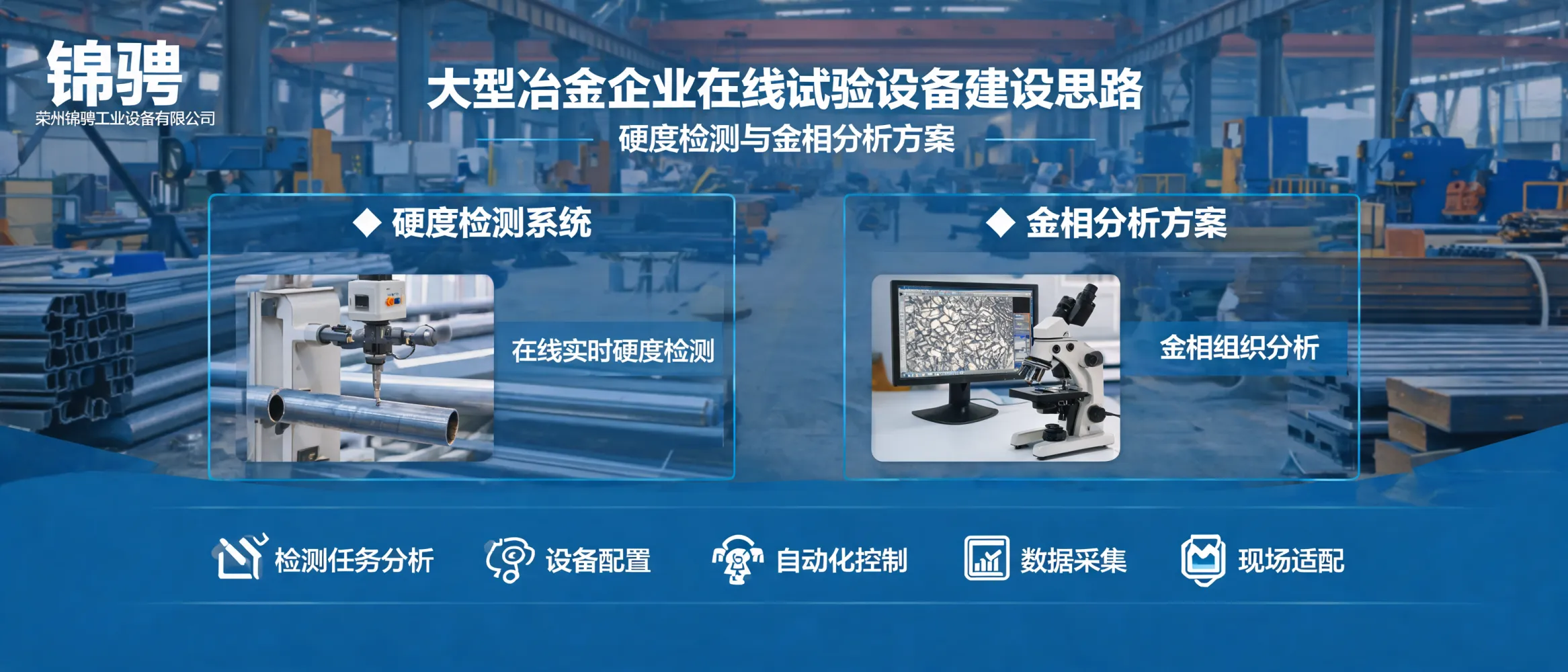
Large metallurgical plants increasingly require online testing equipment that can connect inspection tasks to production rhythms—without compromising safety, traceability, or measurement consistency. This page outlines a practical planning framework for configuring an online inspection system that integrates hardness testing and metallographic analysis, with attention to automation control, data acquisition, and on-site integration.
Who this is for: Quality managers, process engineers, and project teams evaluating feasibility and architecture for custom-designed online inspection equipment in metallurgy.
Provider context: Laizhou Jincheng Industrial Equipment Co.,Ltd (est. 2004) focuses on hardness testing and metallographic inspection equipment, supplying complete equipment + consumables solutions and supporting customized projects for metallurgical plants.
1) Define the Online Inspection Task (Before Selecting Equipment)
A robust online system starts with a clear task definition. For large plants, this typically means identifying what must be measured, where in the process, and how results will be used for production quality control and project evaluation.
- Inspection objectives: release/hold decisions, trend monitoring, process verification, or R&D sampling.
- Sample and workflow constraints: sampling point, sample form, transfer time, and safe handling requirements.
- Standards and internal criteria: align methods and reporting formats to applicable specifications (e.g., ASTM/ISO requirements where relevant to your workflow).
- Traceability needs: link sample identity, time, batch/heat, operator, and instrument status to the record.
Avoid “equipment-first” planning. In online metallurgy scenarios, task clarity determines the right level of automation, enclosure design, and data interfaces.
2) Configure the Hardness Testing System for Online Use
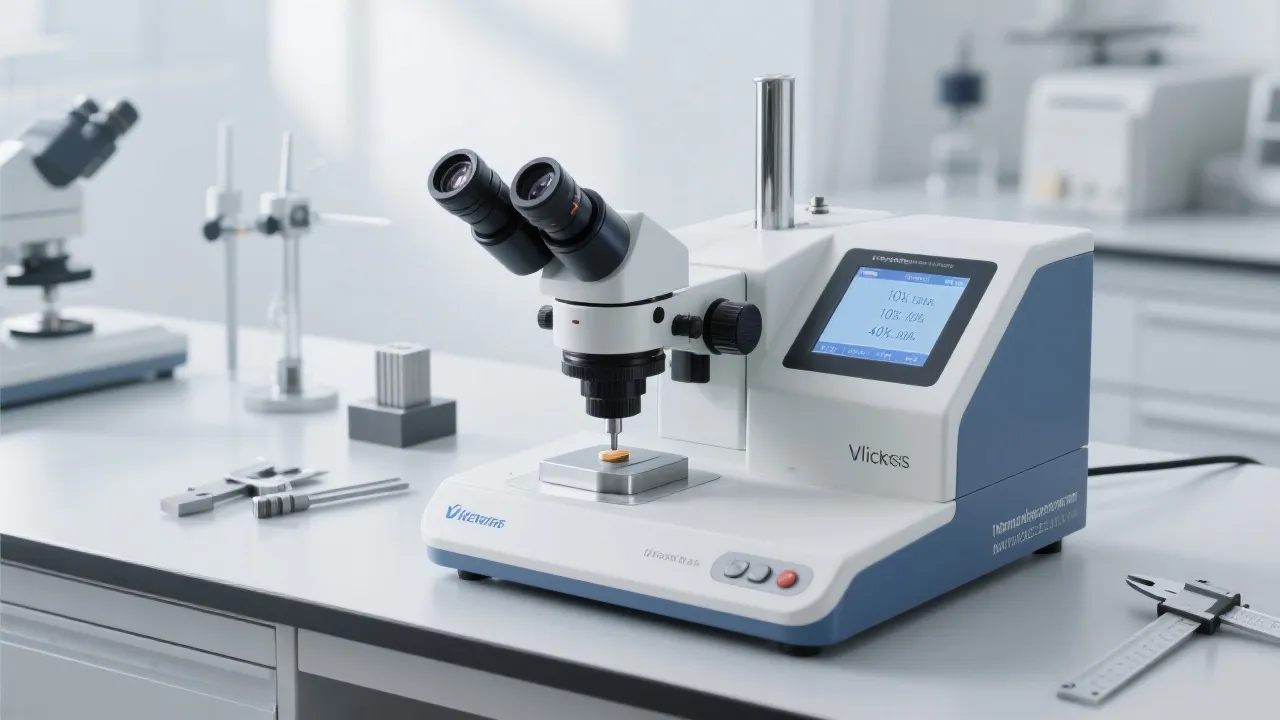
Hardness testing in an online context is not only about producing a Vickers/Brinell/Rockwell value; it is about achieving repeatable indentation conditions, stable positioning, and consistent reporting under plant-floor constraints.
Selection considerations
- Method fit: choose Vickers/Brinell/Rockwell based on material, expected hardness range, and acceptance criteria.
- Automation level: manual-friendly for simplified stations; computerized systems for automated reading and consistent data capture.
- Sensor & control needs: high-precision sensing and intelligent processing to support stable measurement output and statistical review.
- Fixture & positioning: ensure repeatable contact and alignment, especially when sample geometry varies.
Online-ready outputs
- Consistent reporting: standardized templates for value, method, load/time parameters, and operator/system status.
- Statistical usability: data format suited for SPC/trend review (when the plant system requires it).
- Traceable records: association with batch/heat and sampling time to support audit-ready QA processes.
Note: For Laizhou Jincheng Industrial Equipment Co.,Ltd, manual hardness testers can serve fast on-site checks, while computerized hardness testing equipment supports automated workflows with intelligent data processing for quality control routines.
3) Configure Metallographic Analysis: Sample Preparation + Imaging
Metallographic analysis depends heavily on sample preparation quality. In an online or near-line system, the key is to control preparation steps so the final microstructure image is reliable and comparable across shifts and batches.
Preparation options (manual vs. computerized)
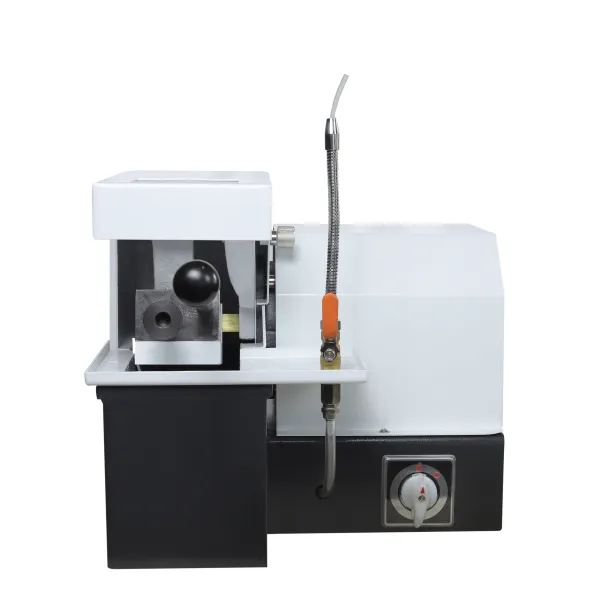
Manual metallographic preparation
- Intuitive operation, suitable for training, teaching labs, and initial material checks.
- Works well where throughput and repeatability requirements are moderate.
Computerized preparation solutions
- Automation control supports consistent processing steps and reduces operator variability.
- High-resolution optical imaging (where configured) helps ensure accurate metallographic sample preparation for precision workflows.
- Designed to align with ASTM and ISO-oriented preparation requirements commonly used in advanced inspection.
In online projects, metallography is often positioned as a near-line station with controlled environment and standardized consumables. This balances practicality (plant conditions) with image quality and repeatability.
4) Automation Control & Data Acquisition Architecture
A successful online inspection system connects instruments to a controllable workflow and a data backbone. Planning should cover control logic, data integrity, and interfaces to plant-level quality systems.
| Layer |
What to define |
Why it matters |
| Device layer |
Instrument configuration, calibration routines, fixtures, safety interlocks |
Stabilizes measurement conditions and reduces variability |
| Control layer |
Workflow sequencing, automation triggers, exception handling |
Ensures repeatable execution under real production constraints |
| Data layer |
Data fields, audit trail, sample ID logic, storage, export formats |
Supports traceability and QA reporting consistency |
| Integration layer |
Interfaces to plant QC/MES/LIMS (as required), user roles, permissions |
Makes results actionable for production decisions and evaluation |
5) On-Site Integration in Metallurgical Plants: Practical Constraints to Plan For
Metallurgical sites introduce environmental and operational factors that can influence hardness testing and metallography. Early identification of constraints helps shape enclosure design, station layout, and operating procedures.
Environment & safety
- Dust, vibration, temperature variation, and utilities availability
- Safe sampling, handling, and operator protection requirements
- Maintenance access and consumables replenishment routes
Process & throughput
- Sampling frequency and station capacity targets
- Queue logic and exception flows (re-test, re-prep, hold)
- Operator roles and training requirements for consistent execution
Quality & governance
- Calibration planning and verification routines
- Record completeness: parameters, images (if required), and approvals
- Change control when methods or acceptance criteria evolve
6) A Practical Planning Flow for Customized Online Inspection Equipment
- Task analysis: define materials, sampling points, acceptance criteria, and reporting needs.
- Method mapping: select hardness methods and metallographic preparation/imaging scope that match objectives.
- Equipment configuration: choose manual vs computerized modules based on throughput, repeatability, and staffing.
- Automation & data design: define control logic, data fields, traceability, and integration interfaces.
- Site adaptation: confirm environment constraints, layout, utilities, safety, and maintenance access.
- Validation planning: align calibration, verification, and documentation to internal QA requirements and applicable standards.
Work with Laizhou Jincheng on System Planning
As a B2B manufacturer specializing in hardness testers and metallographic analysis equipment, Laizhou Jincheng Industrial Equipment Co.,Ltd supports customers with end-to-end consideration—from equipment selection and consumables to automation-ready configuration and on-site adaptation for large metallurgical plants.
Typical inputs to prepare
- Materials and product forms to be tested
- Target methods (Vickers/Brinell/Rockwell) and metallography scope
- Sampling rhythm, shift pattern, and data reporting expectations
- Site constraints: space, utilities, environment, safety requirements
What you can evaluate from this framework
- Feasibility and boundaries of an online/near-line inspection station
- Module selection: hardness testing system + metallographic preparation/imaging
- Automation and data acquisition requirements for QC integration
- On-site integration risks to address early in project planning
For projects serving Russia, Southeast Asia, and Europe, planning can be aligned to local site practices while maintaining consistent inspection logic and documentation structures.


Hardness-TesterHVS-5103050A-7.jpg?x-oss-process=image/resize,m_fill,h_600,w_600/format,webp)







Hardness-TesterHV-1000-1.jpg?x-oss-process=image/resize,h_1200,m_lfit/format,webp)

Hardness-TesterHVS-5103050-1.jpg?x-oss-process=image/resize,h_1200,m_lfit/format,webp)


