Cleaning
Wipe contact surfaces and the indenter area after each job. Keep optical components clean and protected to maintain crisp diameter readings.
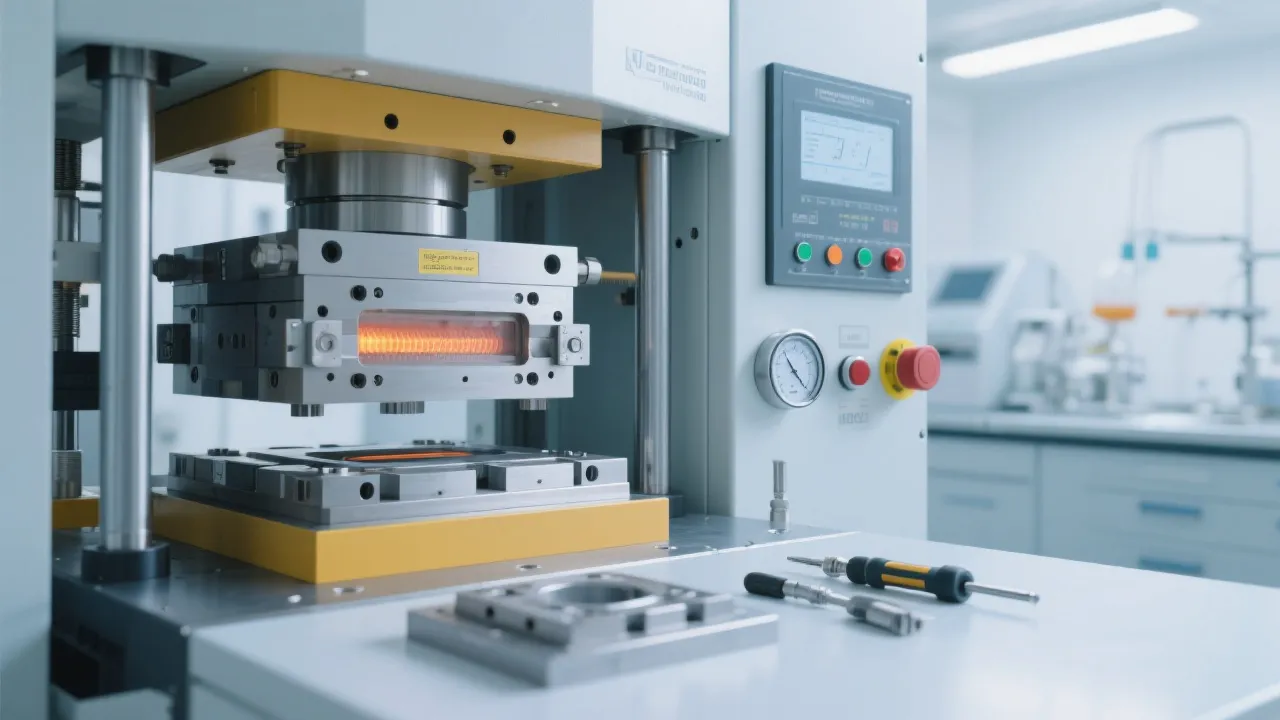
On-site Brinell testing is often used for castings, forgings, heat-treated parts, and large components that can’t be moved to a lab. But field accuracy depends less on “having a tester” and more on correct installation, controlled loading, proper indenter ball choice, and disciplined calibration. This practical guide explains the end-to-end operation of the portable Brinell hardness tester YHB-3000H from Laizhou JinCheng Industrial Equipment Co., Ltd., including step-by-step operation, data reading, indenter replacement, calibration, troubleshooting, and maintenance—so inspectors can work faster while staying confident in every result.
Brinell hardness (HBW) is calculated from the indentation diameter after applying a defined force with a ball indenter. In practice, accuracy is mainly affected by: surface preparation (flat, clean, stable contact), load holding time, loading rate, indenter condition (ball wear), and verification with reference blocks. For most production inspections, many QC teams aim for repeatability within ±3% to ±5% HBW depending on material and surface condition (rough or curved parts may widen variation).

A portable Brinell system usually includes the tester body, support frame or reaction device, indenter balls, a measuring microscope or optical reader, and reference blocks. To reduce operator-to-operator variation, it is recommended to standardize setup steps in SOP form.
Practical tip: If the part is thin or hollow, add a rigid backing or support directly under the test point. Lack of support is a common reason for “soft” readings in the field.
The workflow below is designed to be used as a training-ready checklist. When operators follow consistent timing and loading behavior, Brinell results become far more repeatable—especially across shifts and job sites.
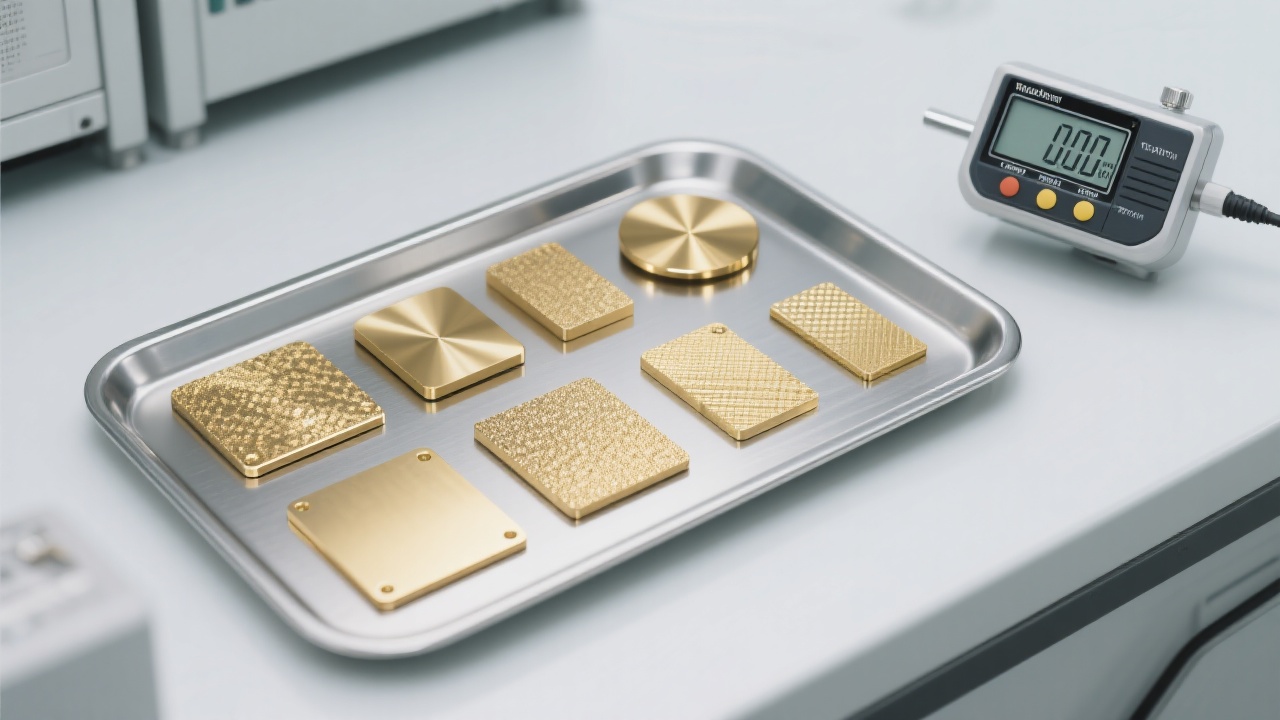
Brinell is only as good as the indentation measurement. Whether using an optical reader or microscope, the key is consistency: same lighting, same focus method, and the same measurement approach across technicians. Many teams measure two perpendicular diameters and use the average to reduce bias—especially if the surface has slight directionality from grinding.
| Item | Example Entry | Why it matters |
|---|---|---|
| Material / Heat state | 42CrMo, quenched & tempered | Hardness is process-dependent |
| Ball & force | 10 mm ball, 3000 kgf class load | HBW must match test conditions |
| Dwell time | 12 s | Affects indentation size |
| Diameters | d1 = 3.42 mm, d2 = 3.38 mm | Average reduces operator bias |
| HBW result | HBW 285 | Comparable across lots |
If readings drift over time, do not “average away the problem.” First check surface condition, support rigidity, and indenter wear; then verify using a certified reference block.
Indenter ball selection depends on expected hardness and the type of alloy. In general, harder materials require more robust ball materials and appropriate combinations of ball diameter and force to produce a readable indentation without excessive deformation. A worn or contaminated ball can create inconsistent impressions and unstable results—even when everything else seems correct.
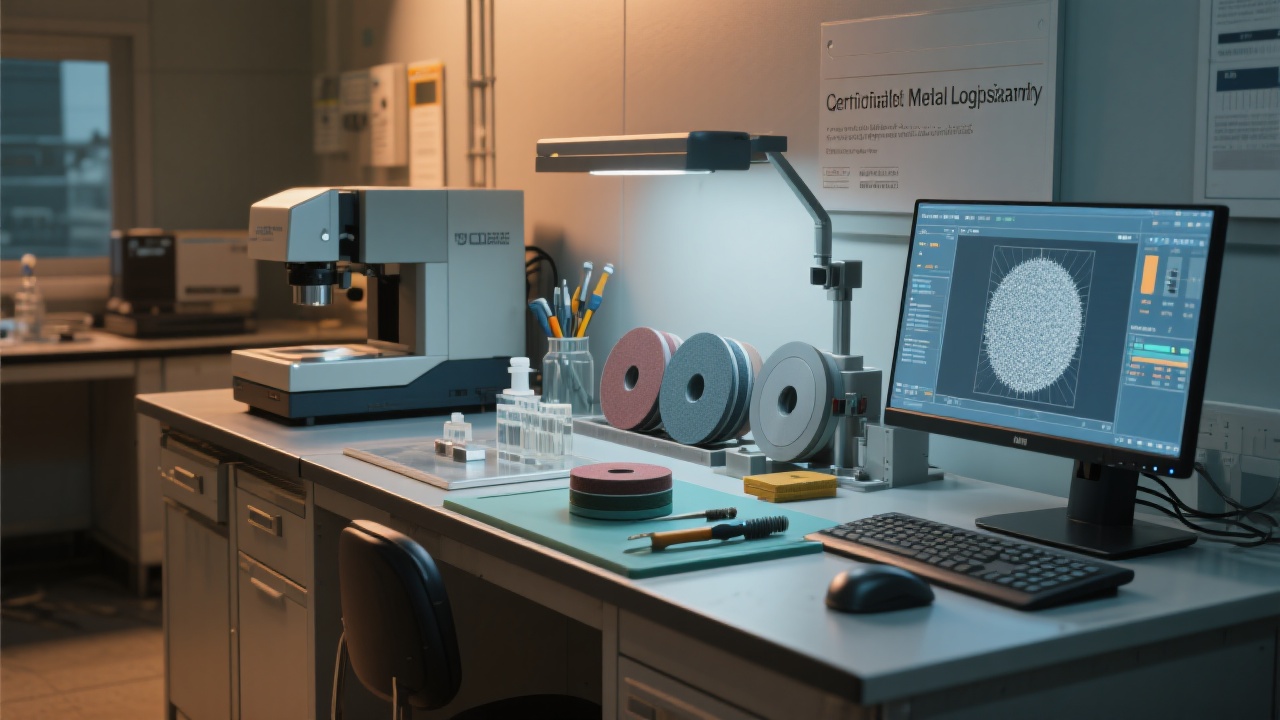
In field work, a realistic goal is not “calibrate every time,” but to build a verification habit that catches drift early. Many QC departments verify portable Brinell testers at the start of each shift, after any indenter change, after transport, or when results look unusual.
| Scenario | Recommended action | Reason |
|---|---|---|
| Start of shift | 1–3 tests on reference block | Confirms stability before inspections |
| After transport to new site | Verification test + visual check | Detects shocks, misalignment |
| After indenter replacement | Verify and document the change | Ball changes can shift results |
| Abnormal scatter in results | Stop testing; troubleshoot; re-verify | Prevents wrong accept/reject decisions |
The YHB-3000H is designed for demanding job sites where portability matters, but the most valuable feature for many teams is the ability to build a repeatable, documentable hardness workflow—so results stay defensible for audits and customer reports.
Portable instruments live a hard life—transport vibration, dust, humid workshops, and rushed handling. A simple weekly routine can prevent most failures and keep measurements stable.
Wipe contact surfaces and the indenter area after each job. Keep optical components clean and protected to maintain crisp diameter readings.
Use a certified reference block to spot drift early. If the same operator sees repeated out-of-tolerance results, stop and troubleshoot before continuing.
Avoid moisture, metal dust intrusion, and impact shocks. Transport in a padded case and keep connectors protected when not in use.
For teams managing multiple inspectors, Laizhou JinCheng’s support model is often a practical advantage: installation guidance, operator training, calibration support, and responsive maintenance help reduce downtime and shorten the learning curve for new technicians—especially when the tester is shared between job sites.
Most differences come from surface prep, alignment, dwell time, and how the indentation diameter is read. Standardize the SOP, measure two diameters, and verify with a reference block at shift start.
Replace it when there’s visible wear, repeated verification failures, or after accidental impact. Many teams also keep a preventive schedule for high-volume use and always verify after replacement.
Yes, when the workflow is controlled: documented parameters (ball/force/dwell), verification records, and consistent surface preparation. If parts are critical, add more test points and keep full traceability.
What material do you test most often—cast iron, carbon steel, alloy steel, or aluminum—and what’s the biggest challenge you face on-site (surface prep, repeatability, or reporting)?
If your team needs faster field inspections with stable, auditable results, request the operating checklist, calibration tips, and application guidance for the YHB-3000H Portable Brinell Hardness Tester.
Get YHB-3000H Operation & Calibration SupportTypical support includes remote setup assistance, operator training suggestions, verification workflow advice, and maintenance response—so your inspectors can focus on decisions, not device uncertainty.


Hardness-TesterHVS-1000A-1.jpg?x-oss-process=image/resize,m_fill,h_600,w_600/format,webp)


-1.jpg?x-oss-process=image/resize,h_1200,m_lfit/format,webp)




Hardness-TesterHV-5103050A-1.jpg?x-oss-process=image/resize,h_1200,m_lfit/format,webp)


.jpg?x-oss-process=image/resize,h_1200,m_lfit/format,webp)