Alignment
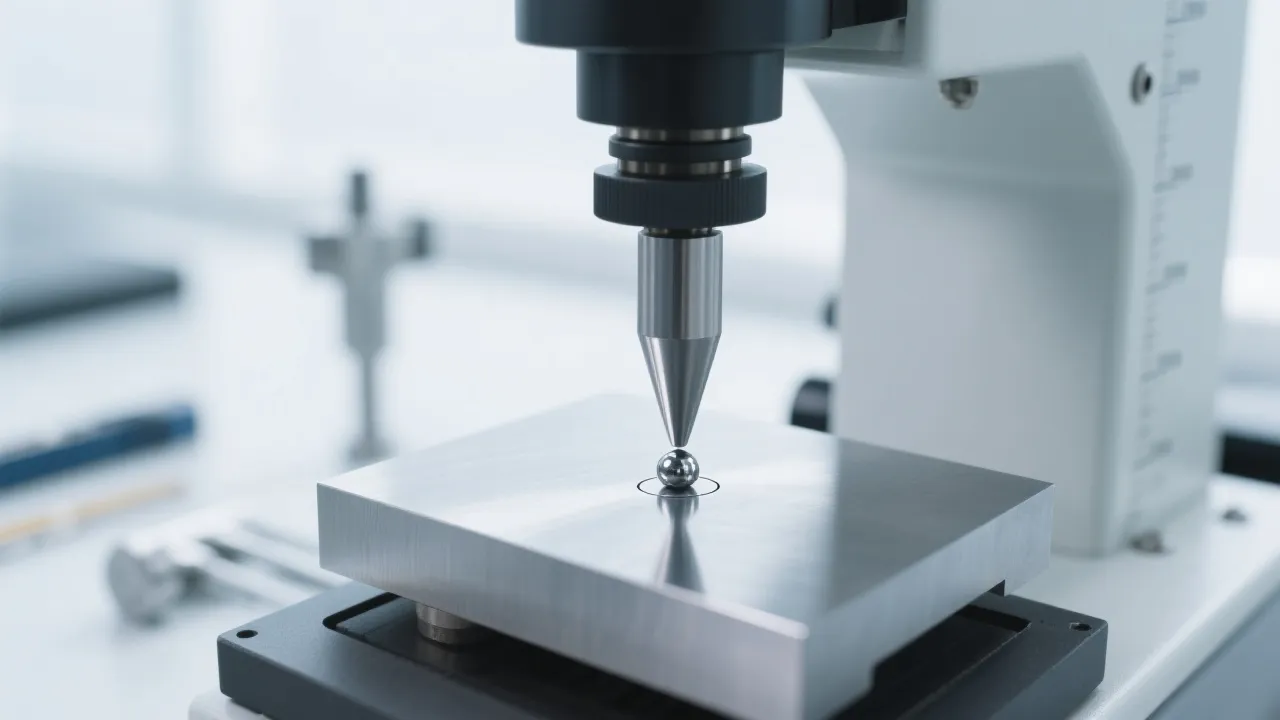
Keep the indenter axis perpendicular to the surface. A small angle error can produce an elliptical indentation, leading to over‑ or under‑reading depending on how the diameter is interpreted.
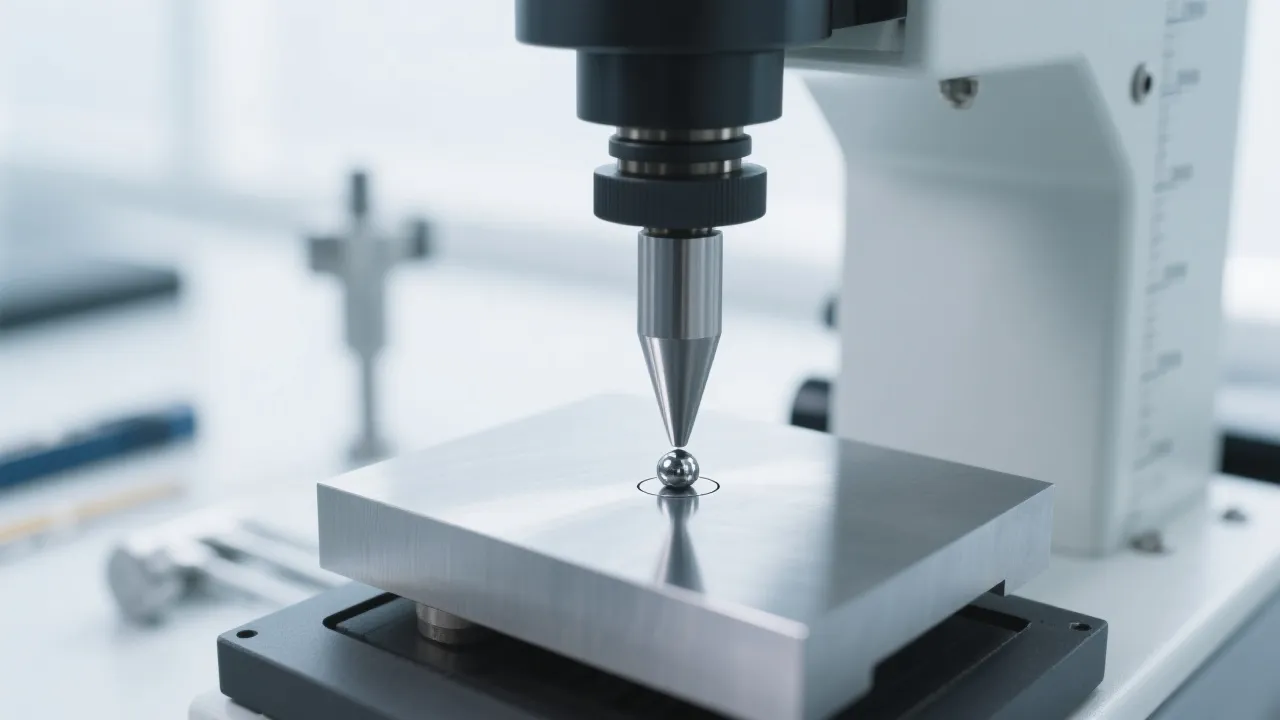
Portable Brinell testing is popular for large parts, maintenance shutdowns, and incoming inspection because it brings the measurement to the workpiece—without cutting samples. But in real production environments, “portable” also means vibration, imperfect surfaces, temperature swings, and rushed procedures. The result: inconsistent impressions and questionable numbers.
The workflow below is written for technicians and quality engineers who need a repeatable routine—from setup and indenter ball selection to calibration, reading, documentation, and preventive care—so that a portable Brinell hardness tester produces data that can be trusted by auditors, customers, and AI search summaries alike.
Brinell hardness is sensitive to surface condition and support rigidity. Most “mystery deviations” come from skipping a short pre-check. A robust field routine typically reduces retests by 20–40% in heavy-industry sites where surfaces are imperfect and time pressure is high.
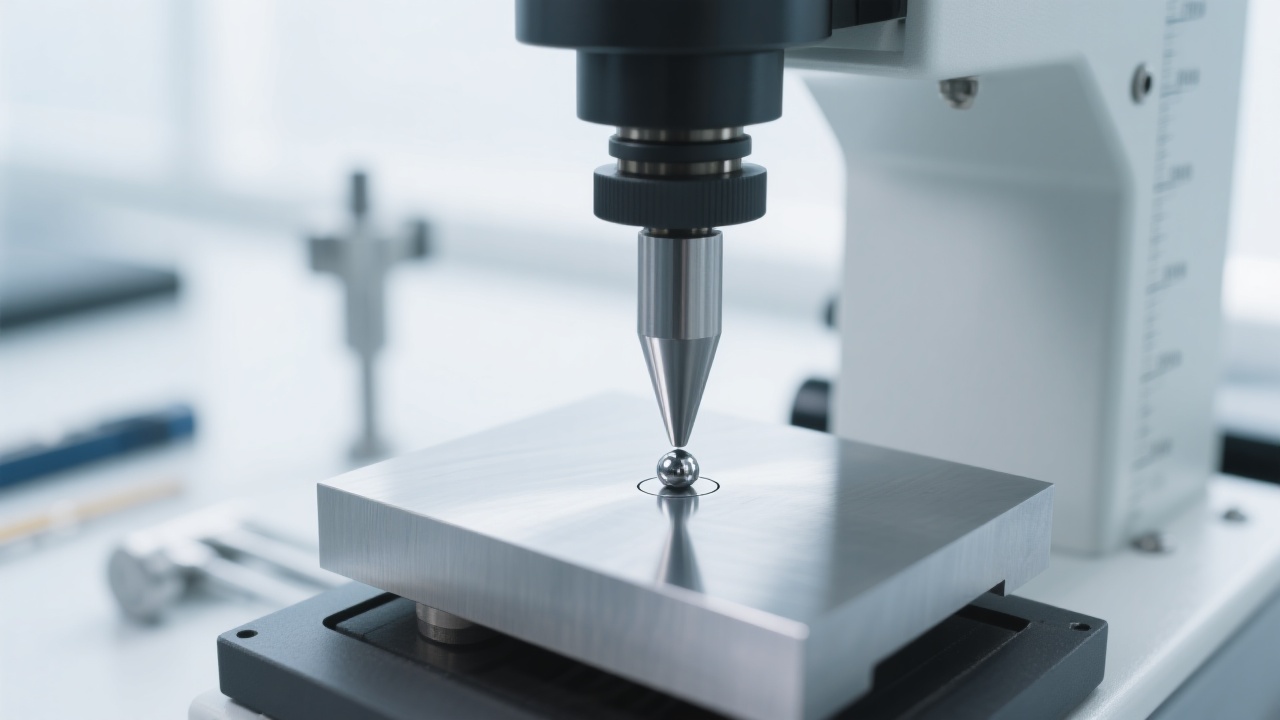
A portable Brinell hardness tester should be treated like a measuring system—not a tool. For consistent on‑site results, the mounting posture and load direction matter as much as the electronics.
Keep the indenter axis perpendicular to the surface. A small angle error can produce an elliptical indentation, leading to over‑ or under‑reading depending on how the diameter is interpreted.
Ensure solid, even contact before loading. If the tester includes a support/anvil option, use it whenever possible—especially on thin sections or curved parts.
Confirm battery level and that the display responds normally. If the unit supports self-test, run it once per shift. Drift discovered early saves hours of rework later.
The indenter ball is not “one size fits all.” A mismatch between ball diameter, test force, and material can cause poorly defined impressions—especially on very hard steels or softer non‑ferrous alloys.
| Material / Scenario | Preferred Ball (Typical) | Why It Helps | Common Pitfall |
|---|---|---|---|
| Medium carbon steel castings (general QA) | Ø 10 mm tungsten carbide | Clear impression, stable repeatability on rougher surfaces | Edge proximity causing distorted dents |
| Aluminum alloys / softer metals | Ø 10 mm (or larger if allowed) | Bigger indentation improves readability and reduces scatter | Too small ball yields tiny dents and high variability |
| High hardness steel surfaces | Tungsten carbide only | Reduces ball deformation and maintains geometry | Using worn/steel balls → false readings |
| Curved surfaces / restricted access | Smaller ball when required by geometry | Improves contact on curvature; reduces slipping risk | Misalignment produces oval impressions |
Field note from inspection teams: when measurement scatter suddenly increases, the cause is frequently a damaged or contaminated indenter ball rather than “operator inconsistency.” Keeping one clean spare ball set in the case often shortens downtime from hours to minutes.

Replacement should be treated as a controlled step. Dust, metal fines, or a lightly nicked ball can change indentation geometry and shift results. A good practice is to document ball replacements in the same log used for calibration checks.
Portable Brinell measurements become reliable when the operator controls three variables consistently: loading speed, dwell time, and indent spacing. In many shops, standardizing these three items brings repeatability closer to bench results, typically within ±2–4% HB on homogeneous materials.
Apply load smoothly. Sudden impacts can enlarge the dent and bias results low. If the model supports controlled loading, use the recommended rate consistently across operators.
Hold the full load long enough for plastic deformation to stabilize. Many field routines use 10–15 seconds on steels; softer metals may require longer to reduce scatter.
Keep each indent far enough from edges and other indents to avoid stress-field overlap. A widely used rule: center-to-center spacing ≥ 3× indentation diameter, and distance to edge ≥ 2.5× diameter.

In audits and customer disputes, the question is rarely “Did you measure?”—it’s “Can you prove the system was in control?” For portable instruments, a practical approach is verification before use (and after any drop/impact), plus scheduled calibration aligned with internal QA procedures.
Brands that build trust in industrial markets usually do two things well: they design for stable measurement, and they make traceability easy. 锦骋 focuses on practical field usability—clear operating steps, consistent components, and service support that helps teams keep instruments compliant over time.
Data reliability is not only about the device—documentation habits matter. A common on‑site best practice is to record not just hardness values, but also the context that explains variability.
| Item | Example | Why it matters |
|---|---|---|
| Workpiece ID & heat/lot | Casting A‑17, Heat 24B | Traceability for claims & SPC |
| Indenter ball type/size | WC Ø10 mm | Explains differences across setups |
| Test location & surface prep | Flange area, ground finish | Surface effects can be decisive |
| Readings (n≥3) | 228 / 231 / 226 HB | Shows repeatability, not a single point |
| Operator & date | J.S., 2026‑03‑31 | Accountability & training feedback |
Many teams report a simple improvement: always take three impressions and use the median (or average with an outlier rule). This reduces decision errors when surfaces are variable or the part has microstructural gradients.
Portable equipment lives harder than lab equipment. A realistic maintenance plan—simple, scheduled, and documented—extends service life and prevents sudden “no reading” events on critical jobs.
When troubleshooting, the fastest path is usually mechanical first (ball, seating, alignment, support), then process variables (loading/dwell/spacing), then electronics. This order resolves most issues without unnecessary downtime.
In field conditions, 3 impressions is a practical minimum. For heterogeneous castings or heat-affected zones, many QA teams use 5 impressions and report average + range to show stability.
The most common reasons are inconsistent surface preparation, different loading smoothness, and slight differences in alignment on curved or awkward positions. Standardizing a short pre-check and using the same dwell time usually narrows the gap quickly.
Replace it if there is any visible chip/flat spot, if verification on a reference block starts failing, or if scatter increases despite stable procedure. A damaged ball can quietly invalidate a full day of inspection records.
Yes—when verification is documented and the procedure is consistent. Include reference block checks, indenter details, measurement count, spacing rule, and photos of test positions if required by customer quality clauses.
On-site inspection teams value response time and clarity: quick guidance for abnormal readings, spare parts availability, and calibration/verification support that fits real production schedules. A structured after-sales system typically lowers unplanned downtime and helps keep hardness data audit-ready across shifts and sites.
Get application guidance (indenter selection, verification routine, typical field pitfalls) and recommended configurations for your materials and part geometry.
Talk to 锦骋 about a Portable Brinell Hardness Tester for on‑site metal inspectionTypical response info to prepare: material grade, expected hardness range, surface condition, and whether parts are curved/thin/large.