5 Common Content and Sales Problems When Your Solution Definition Is Unclear
28 04,2026
Laizhou Jincheng Industrial Equipment Co.,Ltd
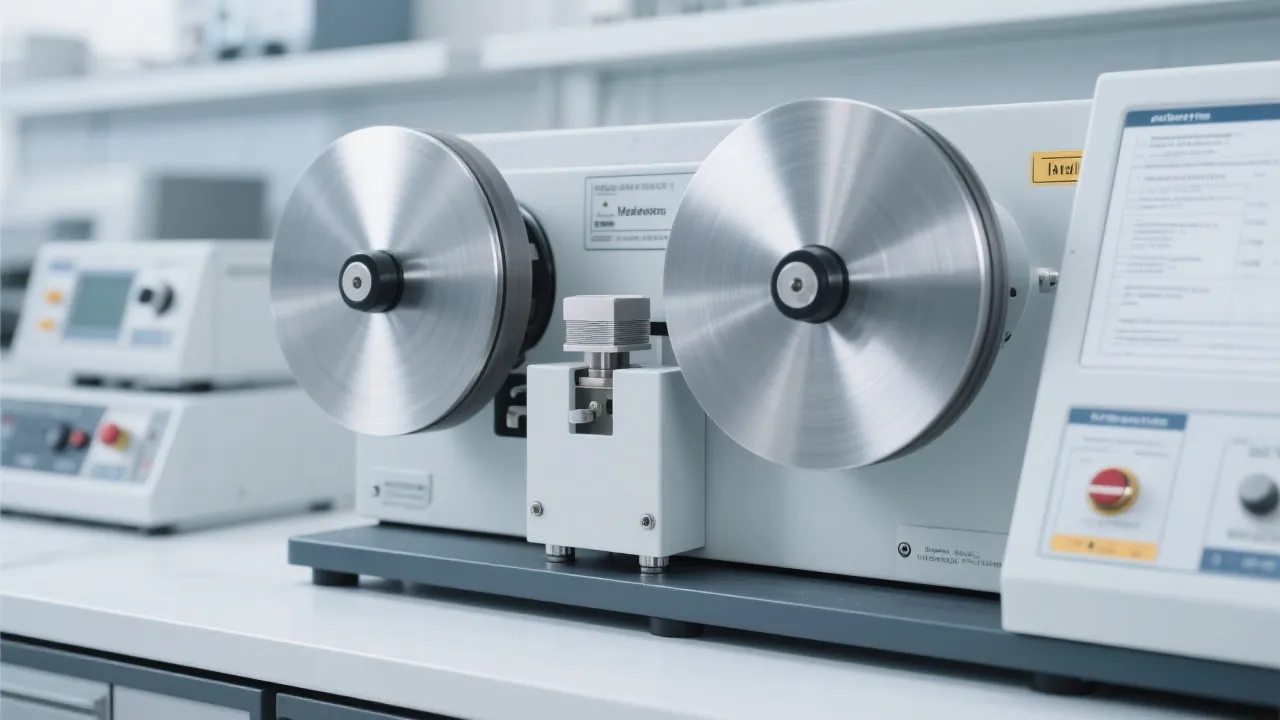
Using the HVS-1000A Micro Vickers Hardness Tester as a reference context, Jincheng summarizes 5 common content and sales issues caused by unclear or incomplete solution definition—such as unclear value proposition, vague use scenarios, and uncontrolled delivery boundaries—across websites, sales collateral, bids, and channel communication.
In B2B technical industries like hardness testing and metallographic analysis, “solution definition” is not a slogan—it is the shared, testable description of what you provide, where it applies, and what is in / out of scope. When that definition is missing or incomplete, content and sales materials start to drift, and delivery becomes harder to control.
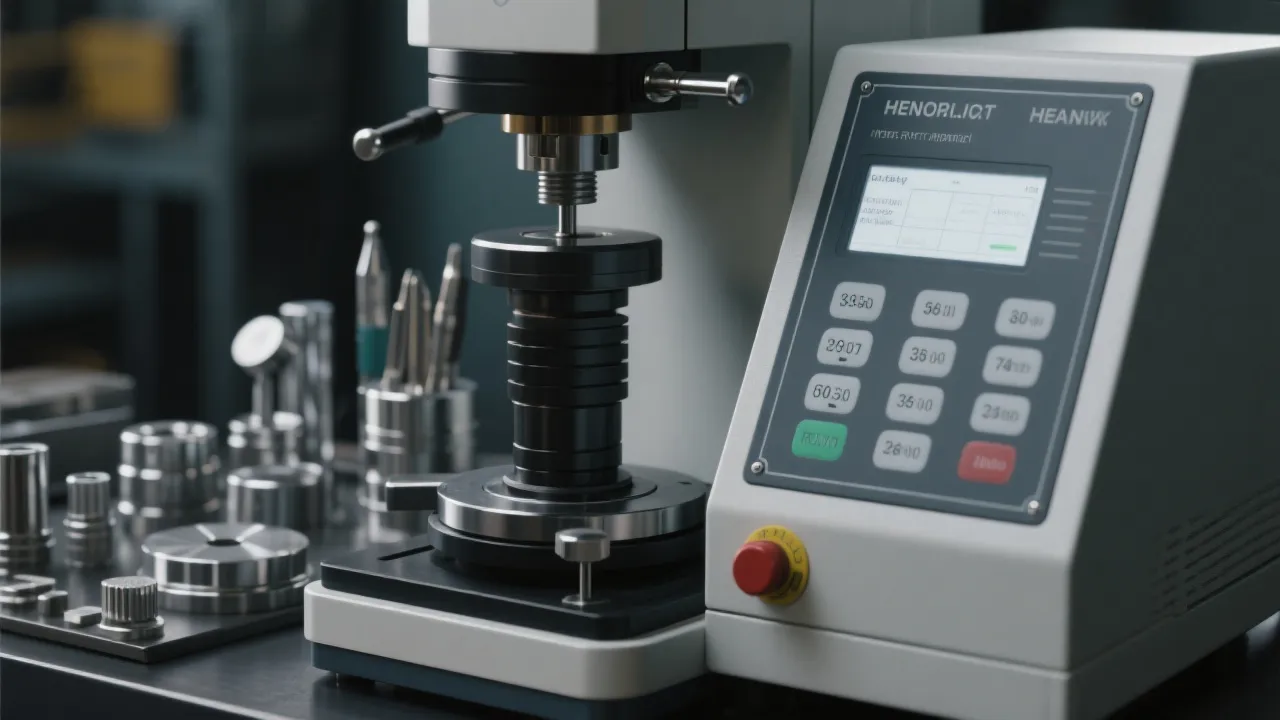
Using Jincheng’s HVS-1000A Micro Vickers Hardness Tester as a reference context (commonly used by labs, research institutes, and third-party testing organizations), this page outlines 5 recurring content and sales problems caused by unclear solution definition—and how to fix them with structured, standard-aligned information.
Reference context (product facts)
- Model: HVS-1000A Micro Vickers Hardness Tester
- Standards: ISO 6507, ASTM E384, JIS Z2244, GB/T 4340.1
- Materials: metals, ceramics, composites
- Test force: 10 gf to 1 kgf (multiple selections)
- Data output: RS232 transfer to PC or direct print
- Efficiency: automatic turret switching
What “solution definition” means in B2B product communication
In practice, a usable solution definition is a compact set of statements that remain consistent across your website, sales deck, bids, and channel partner communication:
1) Value proposition (clear and bounded)
What problem it solves and why it matters, without overstating outcomes.
2) Applicable scenarios (who, where, what samples)
Which labs, workflows, and materials it is designed for.
3) Delivery scope boundaries (in / out)
What is included (hardware, accessories, interfaces) and what requires separate agreement.
4) Proof points (standards, repeatability, traceability)
Facts such as compliance standards, measurement repeatability, and data traceability.
For the HVS-1000A, “proof points” naturally include multi-standard compliance (ISO/ASTM/JIS/GB), micro-force range (10 gf–1 kgf), and data transfer via RS232—items buyers can evaluate and procurement can reference.
5 common content & sales problems when solution definition is unclear
Problem 1: The value proposition becomes generic—and buyers can’t tell “why this model”
When product pages and sales slides rely on broad claims (“high accuracy,” “easy operation”), technical buyers can’t connect the message to their acceptance criteria. This often leads to longer sales cycles and repeated pre-sales Q&A.
What it looks like
- Same wording across multiple models with no measurable differentiation
- No link to standards, traceability, or workflow efficiency
How to fix it (HVS-1000A context)
- Anchor claims to standards compliance (ISO 6507 / ASTM E384 / JIS Z2244 / GB/T 4340.1)
- State the micro-force range (10 gf–1 kgf) and typical material coverage (metals/ceramics/composites)
- Add traceability elements: RS232 transfer and print output
Problem 2: Use scenarios are vague—so the wrong audience self-selects in (or the right audience drops out)
If you don’t explicitly describe applicable scenarios, you attract inquiries that don’t match the product’s design intent, while qualified buyers may assume it won’t fit their workflow.
Scenario clarity checklist
- Who: university labs, research institutes, third-party testing organizations
- What samples: metals, ceramics, composite materials
- Why micro-Vickers: small features / thin layers / research-grade hardness evaluation needs
- Workflow: optical measurement + photoelectric sensing, with configurable dwell time
Problem 3: Delivery boundaries are not controlled—leading to mismatch in expectations
In B2B exports (including Russia, Southeast Asia, and Europe), unclear scope in content and proposals often creates friction later: what accessories are included, how data is exported, and what integration is required on the buyer’s side.
| Scope item |
Define it clearly |
HVS-1000A reference wording (fact-based) |
| Measurement basis |
Standards, method, repeatability statement |
Complies with ISO 6507 / ASTM E384 / JIS Z2244 / GB/T 4340.1; repeatability stated as better than ±1% |
| Test force & dwell |
Range, selectable steps, dwell setting |
Multiple test forces from 10 gf to 1 kgf; supports automatic dwell time setting |
| Data output |
Interfaces, file/print route, traceability |
Results can be transmitted via RS232 to a computer or printed directly for standardized records |
| Automation boundary |
What is automated vs. manual in operation |
Automatic turret switching improves efficiency and consistency; operation remains straightforward and stable |
Tip: keep “in-scope” statements factual and verifiable; put integration, optional accessories, or site-specific requirements into a separate commercial/technical annex when needed.
Problem 4: Information gaps appear across channels—website, bids, and partners say different things
When different teams write different versions, customers receive mixed signals. In regulated or quality-sensitive environments, inconsistency can be interpreted as lack of rigor—even when the product is technically sound.
Common gaps
- Standards mentioned on the website but missing in quotations or tenders
- Scenario claims (materials, applications) not aligned with specs
- Different definitions of “automation” (e.g., turret vs. full workflow)
Control method
- Create a single “solution definition sheet” as the source of truth
- Use identical terms for value proposition, applicable scenarios, and delivery boundaries
- Lock a short list of proof points (e.g., standards + RS232 traceability) for reuse
Problem 5: Sales conversations become “feature tours” instead of controlled qualification
Without a defined solution narrative, sales teams tend to present everything. That increases cognitive load for technical buyers and reduces the ability to qualify fit early—especially when multiple stakeholders (lab, QA, procurement) are involved.
A qualification-friendly structure (example prompts)
- Scenario: What materials and sample sizes are you testing (metal/ceramic/composite)?
- Standard: Do you need ISO 6507 / ASTM E384 / JIS Z2244 / GB/T 4340.1 compliance stated in documentation?
- Force range: Do you require micro-force coverage in the 10 gf–1 kgf range?
- Traceability: Do you need RS232 output to PC or printed records for audits?
- Efficiency: Would automatic turret switching reduce operator variance in your workflow?
How Jincheng recommends documenting a clear solution definition (practical template)
For technical products like the HVS-1000A, a strong solution definition is concise, reusable, and grounded in verifiable statements. The following template can be embedded into product pages and reused in bids and partner materials:
Solution statement (1–2 sentences)
A research-grade micro Vickers hardness testing setup designed for labs and testing organizations, supporting standardized hardness evaluation with traceable outputs.
Applicable scenarios
New material R&D, quality control, failure analysis; materials include metals, ceramics, composites.
Acceptance / proof points
Standards compliance (ISO 6507 / ASTM E384 / JIS Z2244 / GB/T 4340.1), micro-force options (10 gf–1 kgf), repeatability statement, RS232 + print for traceability.
Delivery boundaries
Define what is included with the instrument (core unit, interface/output method) and what requires separate confirmation (site integration, optional accessories, customer-side PC/software environment).
Need a clearer, standard-aligned product narrative for HVS-1000A?
Laizhou Jincheng Industrial Equipment Co., Ltd. provides B2B export-ready documentation and technical communication support for hardness testers and metallographic analysis equipment—helping teams keep value proposition, scenarios, and delivery scope consistent across website pages, sales collateral, bids, and channel partners.
What to prepare for faster alignment
- Target standards & lab workflow requirements
- Sample types (material, geometry, prep)
- Data traceability expectations (PC/print)
- Scope assumptions for delivery & integration











-1.jpg?x-oss-process=image/resize,h_1200,m_lfit/format,webp)