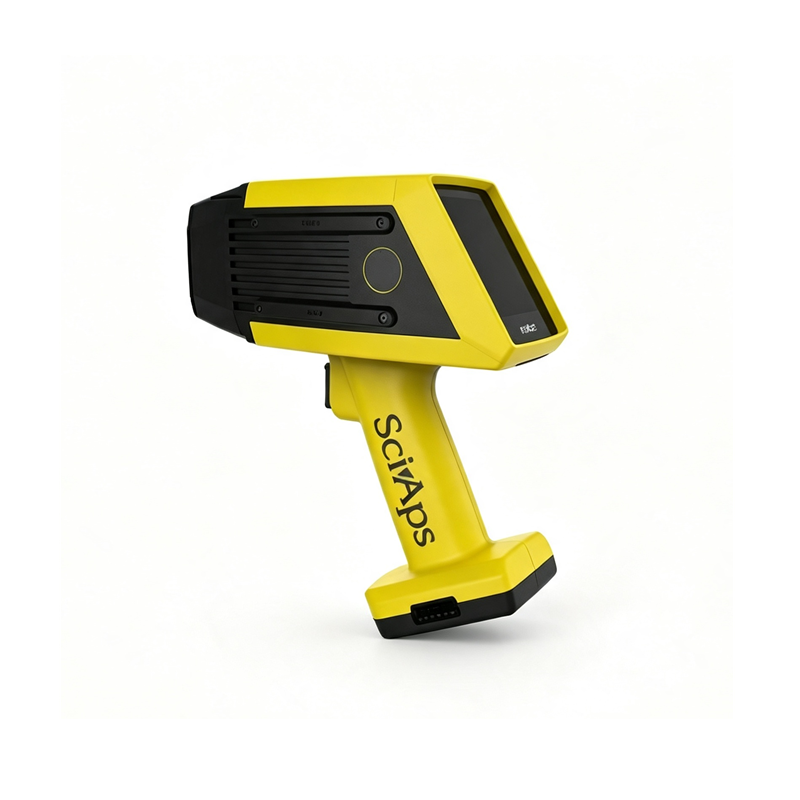
JC-X50 Portable Handheld XRF Analyzer for Fast On-Site Material Identification

jctest-handheld-xrf-spectrometer-jc-x50.png
Specific details
Please contact us
Product Specifications Reference
Configuration elements
Alloy alloying methods include, but are not limited to, Ti, V, Cr, Mn, Fe, Co, Ni, Cu, Zn, Y, Se, Zr, Nb, Mo, Ru, Pd, Ag, Au, Cd, Pb, Bi, Sn, Sb, W, Ta, Hf, Re, etc.

Payment method

COMM
COMM
Product Details
Product Details
PORTABLE ELEMENTAL ANALYSIS

JC-X50 Handheld XRF Analyzer for On-Site Alloy and Mining Material Identification

The JC-X50 handheld XRF analyzer is a portable X-ray fluorescence spectrometer designed for rapid, non-destructive elemental analysis outside the laboratory. It helps industrial teams identify alloy grades, screen metal materials, sort recyclable metals, and assess mining or geological samples directly at the inspection point.

Designed for industrial inspection

Developed by Laizhou Jincheng Industrial Equipment Co., Ltd., the JC-X50 combines an X-ray source, SDD detector, automatic filter control, dual cameras, Android-based software, and digital reporting in one compact instrument.

Why portable XRF analysis is used

Reduce delays between material questions and inspection decisions

When a material grade must be verified on a production line, at a supplier site, in a warehouse, or in the field, sending samples to a laboratory can add handling steps and waiting time. A portable XRF alloy analyzer provides a practical first-line method for screening elemental composition and comparing materials against the selected analysis method.

Incoming material uncertainty

Verify supplied metal parts, bars, fittings, and scrap before they enter production, storage, or downstream processing.

Limited access to test locations

Inspect pipes, weld areas, fasteners, and assembled components where sample removal is inconvenient or undesirable.

Need for documented checks

Link test results with part numbers, batches, images, or inspection points to support internal review and material traceability.

Core measurement capabilities

Hardware and analysis functions built for material screening

X-ray excitation system

A rhodium-target micro X-ray tube supports up to 40 kV, 100 μA, and 4 W in the standard configuration. A 50 kV configuration may be available for selected applications.

High-resolution SDD detection

The SDD detector provides 190 eV FWHM resolution at the 5.95 keV Mn Kα line, supporting separation and evaluation of characteristic elemental signals.

Automatic filter switching

Six filters switch automatically according to operating voltage and target elements, helping the instrument apply appropriate measurement conditions for the selected method.

Alloy and mining modes

Dedicated alloy analysis and mining analysis software packages support material identification workflows across metal processing, recycling, mining, and field inspection.

Element coverage and verification

Configured for broad elemental identification tasks

Depending on the selected calibration model, sample matrix, and instrument configuration, the JC-X50 can support analysis of elements including Ti, V, Cr, Mn, Fe, Co, Ni, Cu, Zn, Y, Se, Zr, Nb, Mo, Ru, Pd, Ag, Cd, Sn, Sb, Hf, Ta, W, Re, Au, Pb, and Bi, together with other elements supported by the selected method.

Measurement interpretation matters

  • An external 316 stainless steel reference sample is supplied for calibration verification and energy-scale checks.
  • Actual detection limits, accuracy, and measurable element ranges depend on surface condition, sample composition, test time, method, and calibration.
  • For formal quality decisions, users should apply suitable calibration procedures and certified reference materials where required by their quality system.

Field-ready operation

Portable construction for workshop, warehouse, and outdoor inspection

Compact inspection access

With a weight below 1.5 kg and approximate dimensions of 238 × 283 × 84 mm, the analyzer is suited to mobile inspection. Its compact probe geometry assists testing in relatively narrow spaces around components and connections.

Stable detector operating conditions

A Peltier cooling system operates the detector controller at approximately -30°C, helping maintain measurement stability under changing field conditions. The nominal ambient operating range is -12°C to 55°C.

Integrated display and power system

The fixed 3.5-inch industrial touchscreen reduces moving parts for dusty, humid, dim, or bright environments. A rechargeable 14.4 V lithium-ion battery supports more than 8 hours of continuous operation under specified conditions, with hot-swappable battery replacement support.

Traceability and reporting

Connect measurement points with usable inspection records

The JC-X50 uses two built-in cameras to help teams confirm the tested location and preserve contextual information. This is useful when several parts, batches, suppliers, or inspection points must be connected to individual elemental analysis results.

Sample positioning support

The internal HD camera displays the sample before and during analysis, helping the operator align the measurement point.

Barcode, QR code, and image capture

A macro camera can scan QR codes and barcodes and capture images for test records and reports.

Digital data sharing

Android-based software supports CSV and PDF output. Results can be transferred by USB or shared by Bluetooth with compatible mobile devices, supporting timely review by quality, production, purchasing, or technical teams.

Typical applications

Where the JC-X50 handheld XRF analyzer can be applied

Incoming inspection

Check raw materials and purchased components before acceptance or processing.

Alloy identification

Screen metal grades in production, maintenance, fabrication, and warehouse operations.

Metal sorting and recycling

Support sorting decisions for mixed alloy materials and recyclable metal streams.

Mining sample screening

Conduct preliminary elemental screening of ores, geological materials, and mining-related samples.

Component and weld-area checks

Inspect pipes, weld regions, fasteners, and components in restricted or difficult-to-sample locations.

Quality control documentation

Create exportable elemental analysis records for batch review and inspection traceability.

Suitable users and operating considerations

A practical tool for B2B teams that need material information at the point of work

The JC-X50 is suited to mechanical manufacturing, metallurgy, mining, metal recycling, chemical processing, power generation, research institutions, and industrial quality-control laboratories. It is particularly relevant for teams that require portable alloy identification or elemental screening without routine sample transfer to a laboratory.

Standard package contents

The standard delivery package includes the analyzer, protective waterproof carrying case, USB cable, two rechargeable batteries, charger set, replacement Kapton film window kit, operating documents, software recovery media, 316 stainless steel reference sample, service tool, and alloy and mining software packages.

Safe and responsible operation

Because the instrument generates X-rays during measurement, it must be operated only by trained personnel in accordance with the operating manual, workplace procedures, and applicable local radiation safety regulations. Critical or disputed results may require confirmation using an appropriate laboratory method.

Bring elemental analysis closer to the material being evaluated

The JC-X50 portable handheld XRF analyzer gives inspection teams a structured way to screen materials, identify alloys, record test locations, and share elemental analysis data in the field or on the shop floor. With its combination of portable hardware, dual-camera documentation, configurable analysis modes, and digital reporting, Laizhou Jincheng provides an instrument designed to support informed material-control workflows without replacing the need for appropriate quality procedures or confirmatory testing where required.

Product Parameters

JC-X50 Handheld XRF Analyzer

Handheld XRF Analyzer

Detailed Packing List

1) 

Handheld XRF analyzer

One handheld XRF analyzer main unit

2) 

Waterproof, rugged carrying case

One waterproof shipping box

3) 

USB Data transfer cable

One USB communication cable

4) 

2 Li-ion batteries

Two 14.4V rechargeable lithium batteries

5) 

Battery charger

1 set of battery charger

6) 

Kapton film window kit

One set of protective film for the inspection window (for backup) 

7) 

Operation manual

One instruction manual

8) 

Analysis software Recovery USB flash disk

Analysis software backup USB drive

9) 

Alloy standard sample

Alloy Standard Sample 3: 16 Stainless Steel

10) 

Special screwdriver

1 special tool

11) 

Note

One copy of usage instructions

12) 

I nstallation acceptance list

Two installation acceptance forms


Analysis software package

1) 

Mining Mode

Alloy Analysis Mode

X50 Technical Specifications

Inspiration Source

High-performance miniature X-ray tube, Rh target anode material; maximum tube voltage 40KV; maximum tube current 100uA; matching power 4W (50kV optional).

Detector

High-performance, high-precision, high-sensitivity SDD detector; 190eV resolution FWHM, 5.95Mn K-α line.

★Standard Block

External 316 stainless steel standard samples are used for calibration verification and energy scaling verification.

Analyzing the environment

Ambient temperature: -12°C to 55°C

External dimensions:

Dimensions: 238mm x 283mm x 84mm ; Instrument head dimensions: 22mm (front) x 45mm (middle) x 60mm (rear). It can test both standard metal samples and samples requiring close inspection in narrow slits . Weight: <1.5 kg . No external support is needed; the instrument can be placed upright on a horizontal surface, making testing more effortless.

Cooling system

The instrument employs a Peltier constant-temperature cooling system, allowing the controller to operate at -30 ℃, ensuring the instrument's detection accuracy and preventing it from being affected by external temperatures.

Configuration elements

Alloy alloying methods include, but are not limited to, Ti, V, Cr, Mn, Fe, Co, Ni, Cu, Zn, Y, Se, Zr, Nb, Mo, Ru, Pd, Ag, Au, Cd, Pb, Bi, Sn, Sb, W, Ta, Hf, Re, etc.

filter

It is equipped with 6 filters that can automatically switch according to different voltages, and different elements use different filters to produce the best analysis results.

monitor

The integrated design enhances dustproof, fogproof, and waterproof performance; the fixed display with no rotating or moving parts results in a low failure rate; the industrial-grade high-resolution PowerVR SGX540 3.5- inch smart touchscreen utilizes white light display technology, eliminating the high-altitude effect of LCDs and providing excellent visibility in both low-light and high-light environments. It also boasts low energy consumption, consuming half the power of traditional white light displays, thus improving display performance in various environments.

Camera & Collimator

Built-in dual cameras : an internal high-definition camera for viewing samples before and during analysis to ensure proper sample alignment; and a macro camera for scanning QR codes or barcodes, as well as generating photo documents and reports.

Operating System

Android smart operating system

memory card

1GB DDR2 RAM, 1GB NAND, 8GB eMMC (storage)

Data format

CSV and PDF formats

Data transmission

Featuring a dual-core ARM Cortex-A9 processor (1.2GHz) and an ARM Cortex-A53 64/32-bit processor, the system allows for real-time sharing of test results to mobile phones via Bluetooth. Results can be sent to relevant personnel on-site via WeChat, QQ, or email, offering convenience, speed, and improved communication efficiency.

Main unit power supply system

It uses a rechargeable lithium battery, which can work continuously for more than 8 hours on a single charge, and features hot-swappable functionality (maximum swap time 60 seconds). 

Testing software

Alloy-specific testing software

Automatic diagnostic and fault reporting functions

Machine faults can be diagnosed and software upgraded remotely via the Internet; remote hardware upgrades are also possible.

Contact us
Contact us
https://shmuker.oss-accelerate.aliyuncs.com/tmp/temporary/60ec5bd7f8d5a86c84ef79f2/60ec5bdcf8d5a86c84ef7a9a/thumb-prev.png