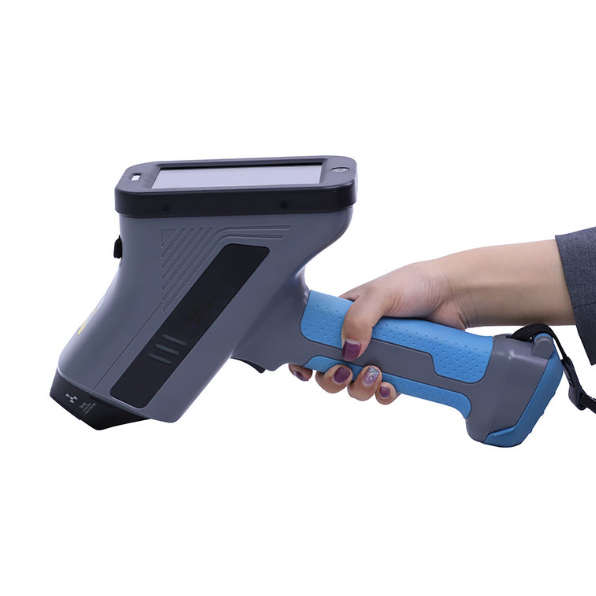
JC-HJ350 Handheld XRF Analyzer for Fast On-Site Alloy Identification

jctest-handheld-xrf-alloy-analyzer-jc-hj350.png
Specific details
Please contact us

Payment method

COMM
COMM
Product Details
Handheld XRF Alloy Analyzer JC-HJ350
HANDHELD XRF METAL ANALYSIS

On-site alloy identification without damaging the material

The JC-HJ350 Handheld XRF Alloy Analyzer is a portable X-ray fluorescence instrument for rapid analysis of solid metal materials. It supports non-destructive alloy grade identification, metal composition analysis, and positive material identification (PMI) at the point of inspection.

DESIGNED FOR FIELD VERIFICATION

Developed by Laizhou Jincheng Industrial Equipment Co., Ltd., the JC-HJ350 combines portable testing, spectrum review, result storage, and report output in one field-ready device for industrial material control.

WHY ON-SITE PMI MATTERS

Material information needs to be available where decisions are made

In pressure equipment, piping systems, fabrication workshops, warehouses, and recycling yards, material markings may be incomplete, unclear, or inconsistent with the actual alloy. Laboratory analysis remains important for many tasks, but sample cutting and off-site testing can add time and process steps when a rapid initial check is needed. The JC-HJ350 helps inspection teams obtain elemental information directly at the material location.

Material mix-up screening

Check whether incoming, stored, or installed components show elemental characteristics consistent with the intended material class.

Faster field verification

Perform preliminary checks on pipes, valves, flanges, parts, and metal stock without routine destructive sampling.

Traceable quality records

Connect test results with operators and reporting records to support inspection documentation and follow-up review.

CORE ANALYTICAL CAPABILITIES

Elemental analysis, alloy matching, and practical field feedback

Non-destructive metal composition analysis

The analyzer uses XRF technology to examine solid metal materials while preserving the workpiece structure. It is suitable for raw materials, finished parts, equipment components, piping, and scrap metal screening.

Alloy grade identification support

Using optimized direct-reading analysis and the fundamental parameter method (FP), the JC-HJ350 compares elemental results with alloy grade databases to assist material identification for common engineering alloys.

Broad element coverage for alloy systems

The instrument is designed for relevant elements from Ca to U (atomic numbers 20–92), including commonly assessed alloy elements such as Ti, V, Cr, Mn, Fe, Co, Ni, Cu, Zn, Nb, Mo, Sn, Ta, W, Pb, and Bi.

Analysis note: Measurable elements, detection capability, and reported results depend on material type, surface condition, concentration, test duration, and calibration model.

INSTRUMENT AND DATA WORKFLOW

A portable analyzer built for testing, review, and record management

01

Position and measure

A high-performance Si-PIN detector, 45 kV / 200 μA miniature X-ray tube, and compact test window support controlled measurement of solid material surfaces.

02

Review alloy and spectrum data

The industrial-grade touchscreen provides on-site interaction, while supporting software enables result analysis and spectrum display for technical review.

03

Save, transfer, and report

Wi-Fi, Bluetooth, and supporting software enable synchronization among the instrument, Windows computers, Android devices, and cloud-connected data workflows. Reports can be transmitted by email, Bluetooth, or software.

04

Maintain accountability

Multi-level user management links test data to operating accounts, helping teams organize permissions, track inspection activity, and archive quality records.

FIELD-READY DESIGN

Portable hardware for production, warehouse, project, and recovery sites

With a weight of no more than 1.75 kg including battery and approximate dimensions of 254 mm × 91 mm × 319 mm, the JC-HJ350 is designed to travel with the inspection task rather than require materials to be moved to a fixed testing station.

  • Long-duration operation: 6800 mAh, 7.2 V rechargeable lithium battery with up to 12 hours of continuous operation, depending on usage and environment.
  • Practical power management: Hot-swappable battery support, delayed shutdown, and remaining battery level display help maintain inspection continuity.
  • Site adaptability: Designed for operation from -20°C to +60°C at relative humidity not exceeding 90%.
  • Operational feedback: Material sensing and status indicators help show whether a test object is present and whether identification activity is in progress.

APPLICATIONS

Use the JC-HJ350 where material identity affects the next business action

Pressure equipment and piping PMI

Verify the material characteristics of boilers, pressure vessels, pipelines, valves, flanges, and high-temperature or high-pressure equipment components during inspection and maintenance activities.

Incoming inspection and manufacturing control

Screen alloy materials, semi-finished products, and finished parts in mechanical manufacturing, metallurgy, non-ferrous processing, shipbuilding, and precision fabrication.

Engineering acceptance and maintenance

Support material checks on installed assets and construction materials in petrochemical, refining, power generation, chemical, pharmaceutical, and industrial installation projects.

Scrap metal classification

Identify elemental composition and distinguish alloy categories to help recycling and recovery teams sort metal materials and make more informed grading decisions.

FIT, VALUE, AND RESPONSIBLE USE

A practical instrument for teams that need defensible field-level material information

The JC-HJ350 is suitable for quality managers, material engineers, inspectors, engineering acceptance teams, laboratory and research personnel, maintenance organizations, and metal recovery operators. It helps reduce reliance on routine sample transfer for initial screening while creating usable records for quality and traceability processes.

Use within the appropriate analytical and safety boundary

  • The analyzer must be operated by trained personnel familiar with applicable radiation safety requirements, local regulations, and workplace procedures.
  • The test window must never be directed toward the human body during operation.
  • Low-concentration elements, light elements, coated, corroded, irregular, or complex samples may require surface preparation, standard-sample calibration, or laboratory confirmation.
  • Final analytical scope, optional accessories, and configuration should be confirmed in the applicable technical agreement.

Portable XRF analysis that supports better material control at the inspection point

By bringing non-destructive alloy analysis, grade identification support, data connectivity, and report management into a portable format, the JC-HJ350 provides a structured tool for on-site PMI and metal composition screening. Laizhou Jincheng can assist users in aligning analysis models and instrument application with their material systems, target elements, and operational data requirements.

Product Parameters
Contact us
Contact us
https://shmuker.oss-accelerate.aliyuncs.com/tmp/temporary/60ec5bd7f8d5a86c84ef79f2/60ec5bdcf8d5a86c84ef7a9a/thumb-prev.png